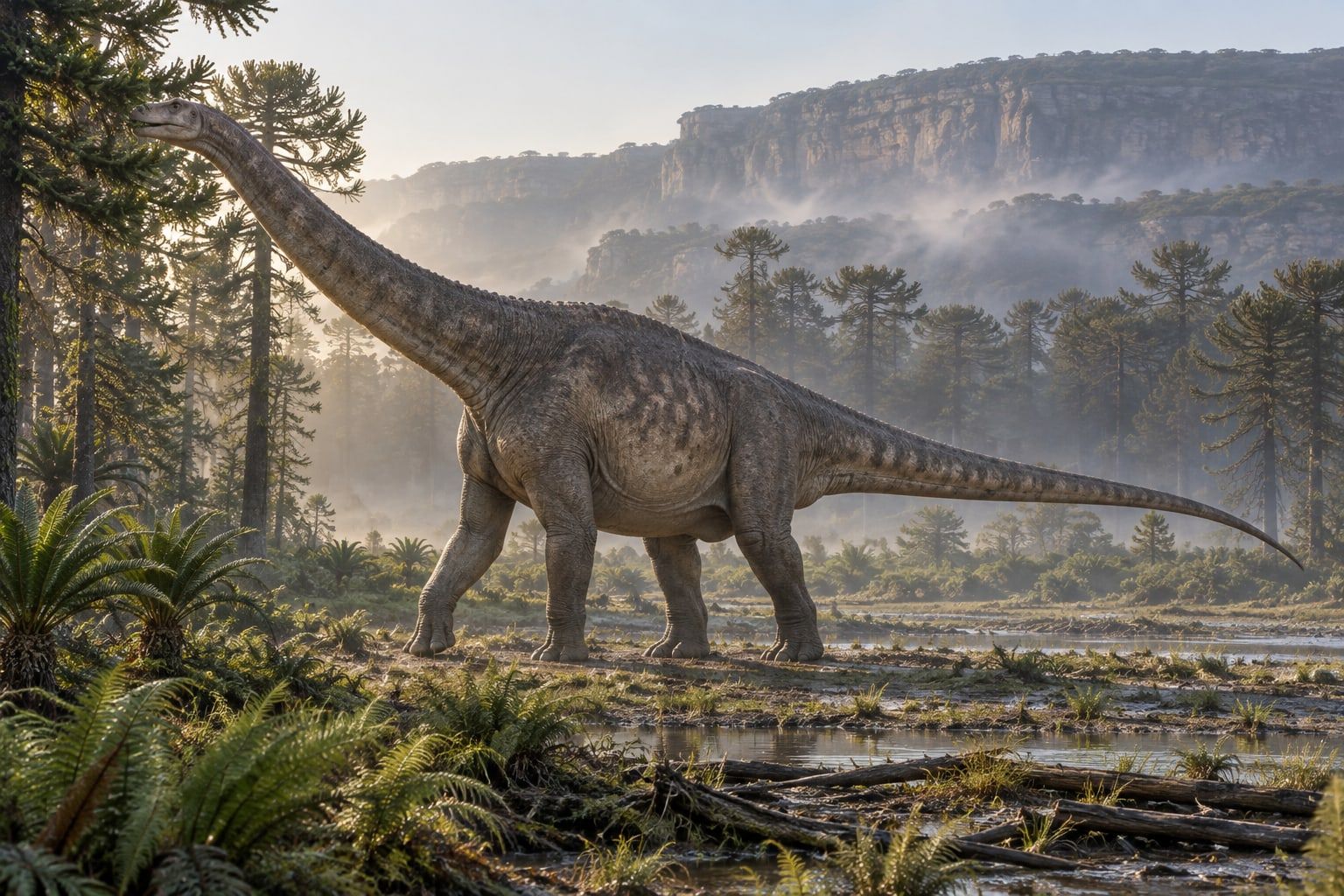
Bicharracosaurus
DV-1297 · type species Bicharracosaurus dionidei
- Lived
- 162 to 149 million years ago, Late Jurassic
- Diet
- Herbivore
- Group
- Sauropods
- Found in
- Argentina
- Named by
- Reutter et al. 2026
Field notes
About Bicharracosaurus
What it was like
Bicharracosaurus was a plant-eating sauropod belonging to Macronaria, the group of long-necked dinosaurs that includes some of the largest land animals ever known. So far it is known from only two fossil finds, so its full body size and proportions are still poorly understood. Its closest relatives, including Aragosaurus, Galveosaurus, and Atlasaurus, suggest it had the typical macronarian build: a long neck, a relatively short tail, and thick, column-like legs to support its weight.
Its world
Bicharracosaurus lived in what is now Argentina during the Late Jurassic, between about 162 and 149 million years ago. Its remains come from the Cañadón Calcáreo Formation, where it shared the landscape with other sauropods such as Brachytrachelopan and Tehuelchesaurus, as well as the predator Pandoravenator.
How it was found
Reutter and colleagues named Bicharracosaurus in 2026, making it one of the more recently described sauropods from South America. The genus contains a single species, Bicharracosaurus dionidei. With only two fossil finds recovered so far, much about its size, appearance, and exact place among the macronarian sauropods remains unknown.
The evidence
Where its fossils were found
Today
155 million years ago
Lived alongside
Found in the same rock formations.
Close relatives
Other members of Macronaria.
Sources: Paleobiology Database, WikidataNamed in: A. Reutter, J. L. Carballido, and G. J. Windholz, D. Pol, O. W. Rauhut. 2026. Bicharracosaurus dionidei, gen. et sp. nov., a new macronarian (Dinosauria, Sauropoda) from the Late Jurassic Cañadón Calcáreo Formation of Argentina and the problematic early evolution of macronarians. PeerJ 14(4443):e20945:1-69