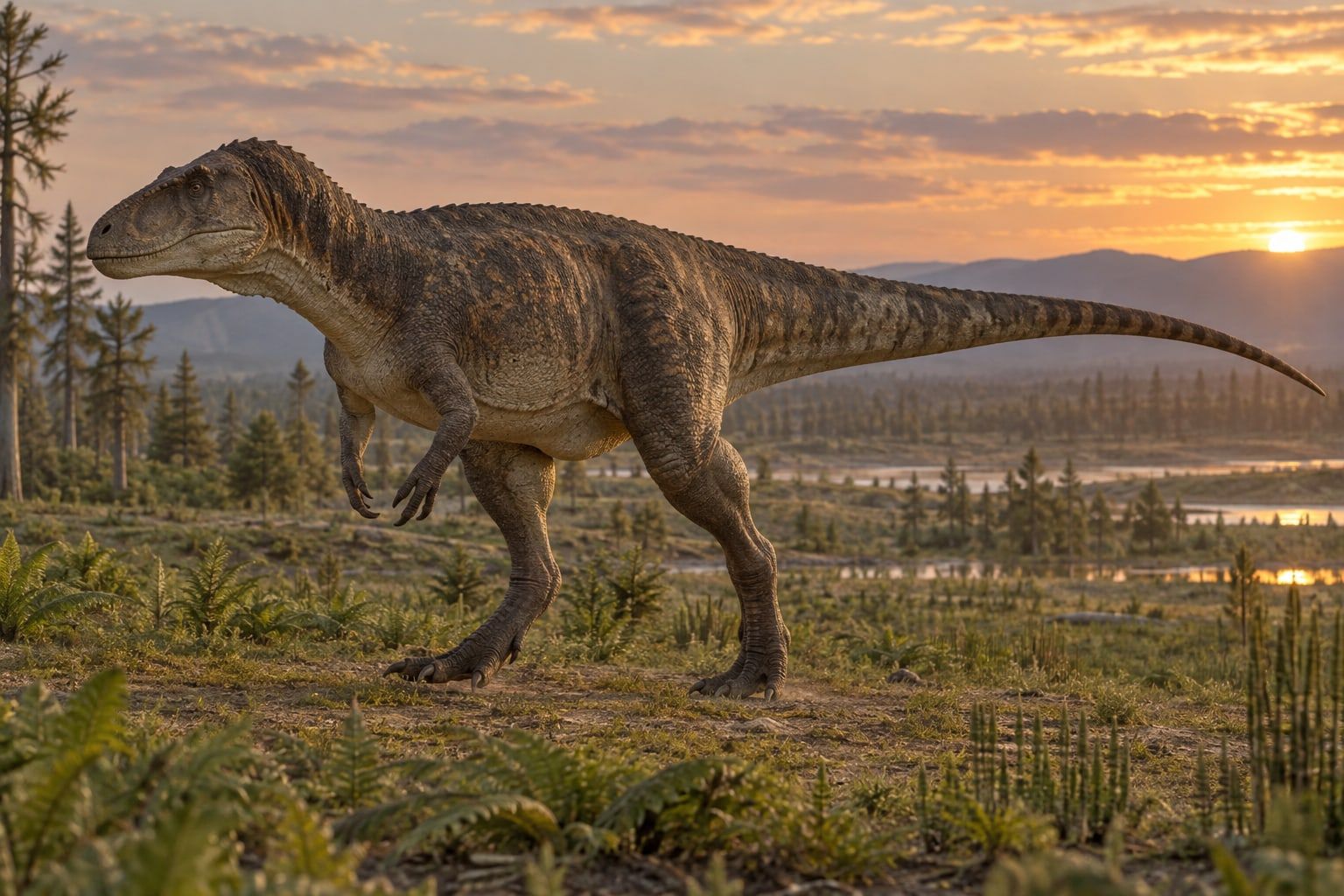
Chilantaisaurus
chih-LAN-tye-SORE-us
DV-0190
- Lived
- 94 to 84 million years ago, Late Cretaceous
- Diet
- Carnivore
- Group
- Theropods, Neovenatoridae
- Found in
- China
- Named by
- Hu 1964
Field notes
About Chilantaisaurus
What it was like
Chilantaisaurus was a large carnivorous theropod known mainly from an incomplete skeleton, including a very large upper arm bone but almost no other limb material. That single bone is among the biggest arm bones known from any theropod, hinting at a powerfully built animal, though its overall size remains hard to pin down without more of the skeleton.
Its classification has shifted repeatedly since it was first described. Different studies have linked it to spinosaurids, to coelurosaurs, and to carcharodontosaurians, and the debate over where it belongs is still not settled.
Its world
Chilantaisaurus lived from about 94 to 84 million years ago, in the Late Cretaceous, in what is now China. Its remains come from the Ulansuhai and Tangshang formations, laid down by winding rivers across a floodplain.
It shared this landscape with the ostrich-like Sinornithomimus and the thick-skulled Sinocephale, both known from the same rock layers.
How it was found
Hu named Chilantaisaurus in 1964, based on a partial skeleton found in China. Two fossil finds are known in total, still not enough to settle its relationship to genera such as Neovenator and Fukuiraptor, both proposed as close relatives in different studies.
The evidence
Where its fossils were found
Today
90 million years ago
Lived alongside
Found in the same rock formations.
Close relatives
Other members of Neovenatoridae.
Sources: Paleobiology Database, WikidataNamed in: S.-Y. Hu. 1964. [Carnosaurian remains from Alashan, Inner Mongolia]. Vertebrata PalAsiatica 8(1):42-63