Lophostropheus
LOH-fo-STROH-fee-us
Type species Lophostropheus airelensis
- Lived
- 206 to 200 million years ago, Late Triassic to Early Jurassic
- Diet
- Carnivore
- Length
- about 6.2 m (20 ft)
- Group
- Theropods
- Found in
- France
- Named by
- Ezcurra and Cuny 2007
Size comparison
To scale

Scale in metersOutline: typical theropod shape
Where its fossils were found
The evidence
Today

200 million years ago
Habitat
It lived on land in what is now France around the transition from the Triassic to the Jurassic.
Field notes
About Lophostropheus
What it was like
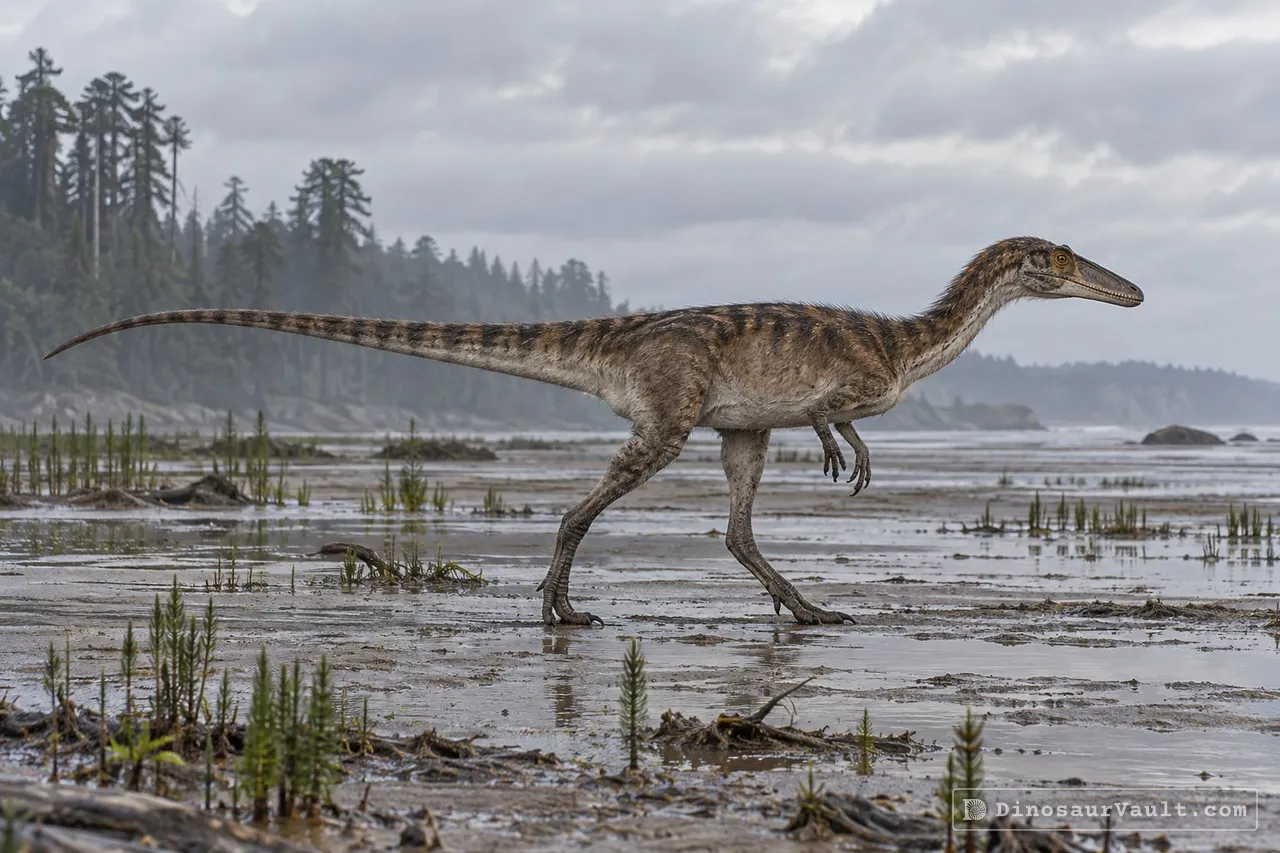
Lophostropheus was a slender, two-legged meat eater related to Coelophysis. It is known from part of the backbone and hips.
Its world
It lived around the time the Triassic ended and the Jurassic began, in what is now France. It is one of few theropods known from right around that boundary, when many animals died out.
How it was found
Ezcurra and Cuny named Lophostropheus in 2007. The type species is Lophostropheus airelensis. Its bones had first been placed in another genus.
Field gallery
More views of Lophostropheus
Scenes reconstructed from the available fossil evidence.
1 of 3
The evidence
The science behind Lophostropheus
Which parts of the picture come from its own bones, and which come from its relatives.
From its own fossils
- A tooth, vertebrae and part of the pelvis provide the known pieces of its skeleton.
- A ridge above the hip socket joins the margin of a hollow on the underside of the hip bone.
Borrowed from relatives
- The missing head and much of the body are restored using Coelophysis.
- Dilophosaurus provides a broader comparison for the missing hands and feet.
Still unknown
- The shape of its skull and the proportions of its limbs.
- Its exact relationships among early theropods.
- Its adult size and age at death.
Discovery timeline
- 2007Named itEzcurra & Cuny
- 2019Growing upGriffin
- 2024Close relativeBugos & McDavid
Key papers
The research behind what we know of Lophostropheus
Named it
Separated Lophostropheus from Liliensternus and placed it closer to the family containing Coelophysis.
The coelophysoidLophostropheus airelensis, gen. nov.: a review of the systematics of“Liliensternus” airelensisfrom the Triassic–Jurassic outcrops of Normandy (France). Journal of Vertebrate Paleontology 27: 73-86
Read the paper : The coelophysoidLophostropheus airelensis, gen. nov.: a review of the systematics of“Liliensternus” airelensisfrom the Triassic–Jurassic outcrops of Normandy (France) (opens in a new tab)Growing up
Identified signs of skeletal immaturity in early theropods, including Lophostropheus, complicating estimates of their adult size.
Large neotheropods from the Upper Triassic of North America and the early evolution of large theropod body sizes. Journal of Paleontology 93: 1010-1030
Read the paper : Large neotheropods from the Upper Triassic of North America and the early evolution of large theropod body sizes (opens in a new tab)Close relative
Described young Coelophysis skulls with large eye sockets and thin bones, adding comparisons for the missing head of Lophostropheus.
Juvenile skulls of Coelophysis bauri from Ghost Ranch, New Mexico. Acta Palaeontologica Polonica 69
Read the paper : Juvenile skulls of Coelophysis bauri from Ghost Ranch, New Mexico (opens in a new tab)
Close relatives
Other members of Coelophysoidea


Sources: Wikidata