Muttaburrasaurus
MUT-uh-BUR-uh-SORE-us
"Muttaburra lizard"
DV-0274
- Lived
- 106 to 94 million years ago, Early Cretaceous to Late Cretaceous
- Diet
- Herbivore
- Length
- about 7 m (23 ft)
- Group
- Ornithopods
- Found in
- Australia
- Named by
- Bartholomai and Molnar 1981
Field notes
About Muttaburrasaurus
What it was like
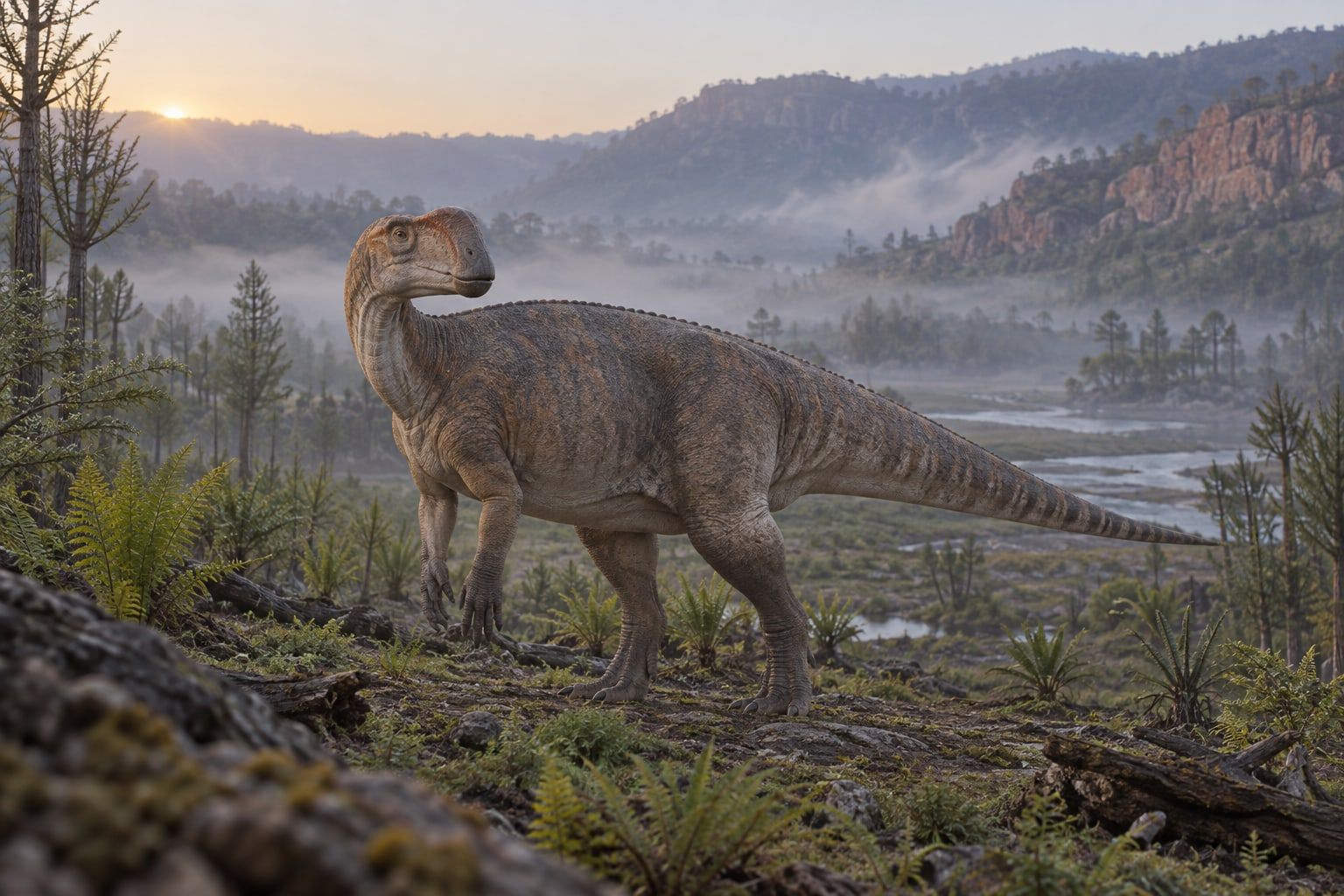
Muttaburrasaurus was a large plant eater with a distinctive, swollen bump on its snout in front of the eyes, whose purpose is still debated. It grew to about 7 meters (23 feet) long and likely moved on two legs, though it may have dropped to four when feeding or moving slowly.
Its jaws held rows of ridged teeth suited for shredding tough plants, and some researchers have suggested the bump on its snout could have supported a fleshy pad used for making sounds or for display, though this remains uncertain.
Its world
Muttaburrasaurus lived from about 106 to 94 million years ago, spanning the Early and Late Cretaceous, in what is now Australia. Its fossils come from the Allaru Mudstone and Mackunda formations.
It shared its world with the long-necked plant eater Austrosaurus, one of the few other dinosaurs known from the same region and time.
How it was found
Bartholomai and Molnar named Muttaburrasaurus in 1981. Around three fossil finds are known, making it one of the more completely known dinosaurs from Australia. Its relatives include Talenkauen and Atlascopcosaurus, part of a wider group of ornithopods once common across the southern continents.
The evidence
Where its fossils were found
Today
100 million years ago
To scale
How big was Muttaburrasaurus?
Lived alongside
Found in the same rock formations.
Close relatives
Other members of Elasmaria.
Sources: Paleobiology Database, WikidataNamed in: A. Bartholomai and R. E. Molnar. 1981. Muttaburrasaurus, a new iguanodontid (Ornithischia: Ornithopoda) dinosaur from the Lower Cretaceous of Queensland. Memoirs of the Queensland Museum 20(2):319-349