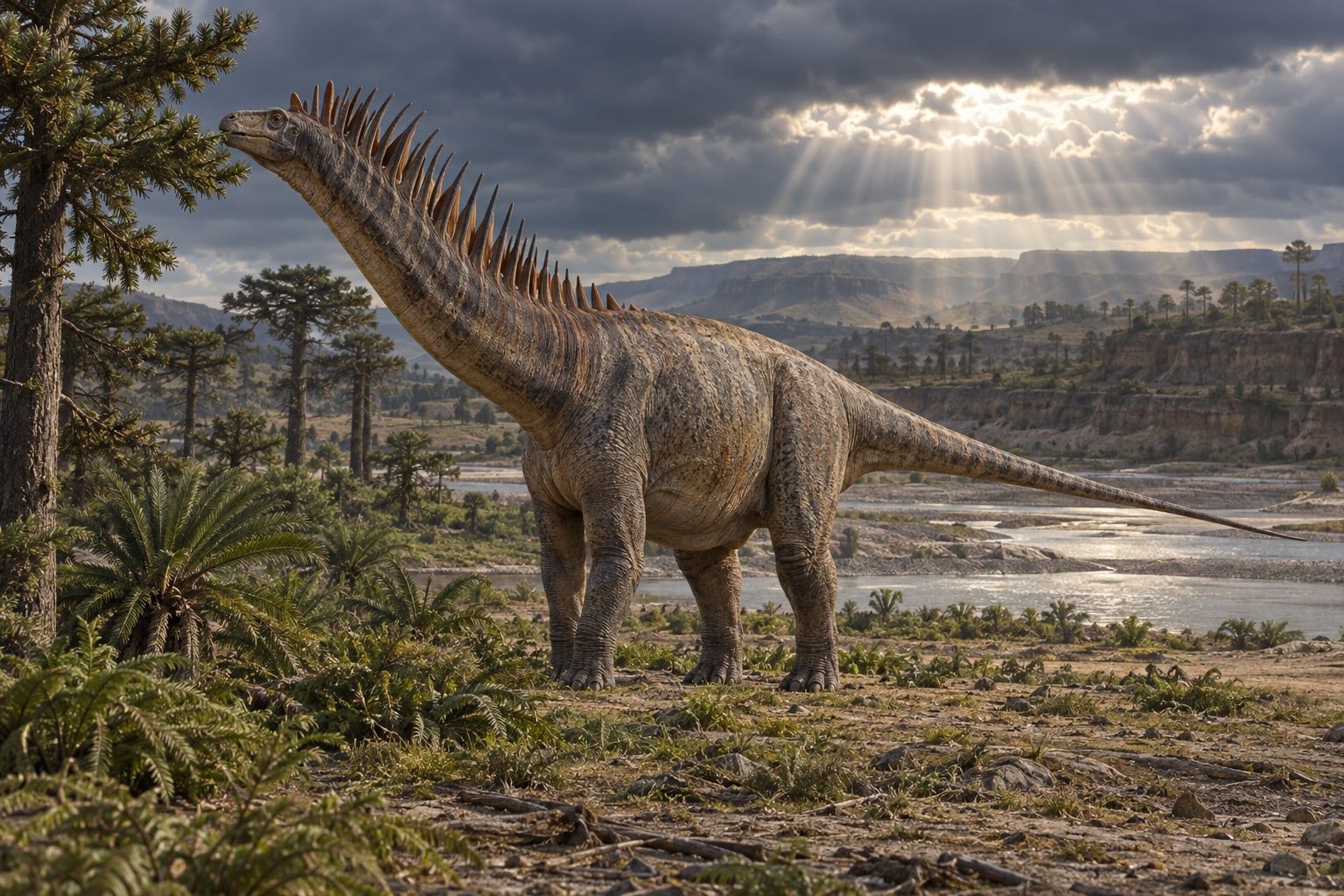
Amargasaurus
ah-MAR-ga-SORE-us
"La Amarga lizard"
DV-0292
- Lived
- 126 to 121 million years ago, Early Cretaceous
- Diet
- Herbivore
- Length
- estimates range from 10 to 12 m (33 to 39 ft)
- Group
- Sauropods, Dicraeosauridae
- Found in
- Argentina
- Named by
- Bonaparte 1984
Field notes
About Amargasaurus
What it was like
Amargasaurus was a sauropod, but a small one by sauropod standards, reaching roughly 10 to 12 meters (33 to 39 feet) long. Its most striking feature was two parallel rows of tall, narrow spines running from its neck down its back.
Paleontologists debate exactly what the spines looked like in life. Some think they stuck up as bare, horn-covered points, while others think they were joined by skin to form a sail along the neck. Either way, they were probably used for display, and possibly for defense.
Its world
Amargasaurus lived from about 126 to 121 million years ago, in the Early Cretaceous, in what is now Argentina. Its bones come from the La Amarga Formation.
It shared its habitat with other sauropods, including Amargatitanis and Zapalasaurus, and with the small carnivore Ligabueino. As a herbivore living alongside other large plant eaters, it probably fed at a different height than its neighbors to avoid competing for the same food.
How it was found
Bonaparte named Amargasaurus in 1984, from a skeleton that is still one of the most complete of any dicraeosaurid sauropod. Only two fossil finds of the genus are known, but the skeleton's completeness has made it one of the best studied members of its family, alongside relatives like Dicraeosaurus and Suuwassea.
The evidence
Where its fossils were found
Today
125 million years ago
Lived alongside
Found in the same rock formations.
Close relatives
Other members of Dicraeosauridae.
Sources: Paleobiology Database, WikidataNamed in: J. F. Bonaparte. 1984. I dinosauri dell’Argentina [. Sulle Orme dei Dinosauri