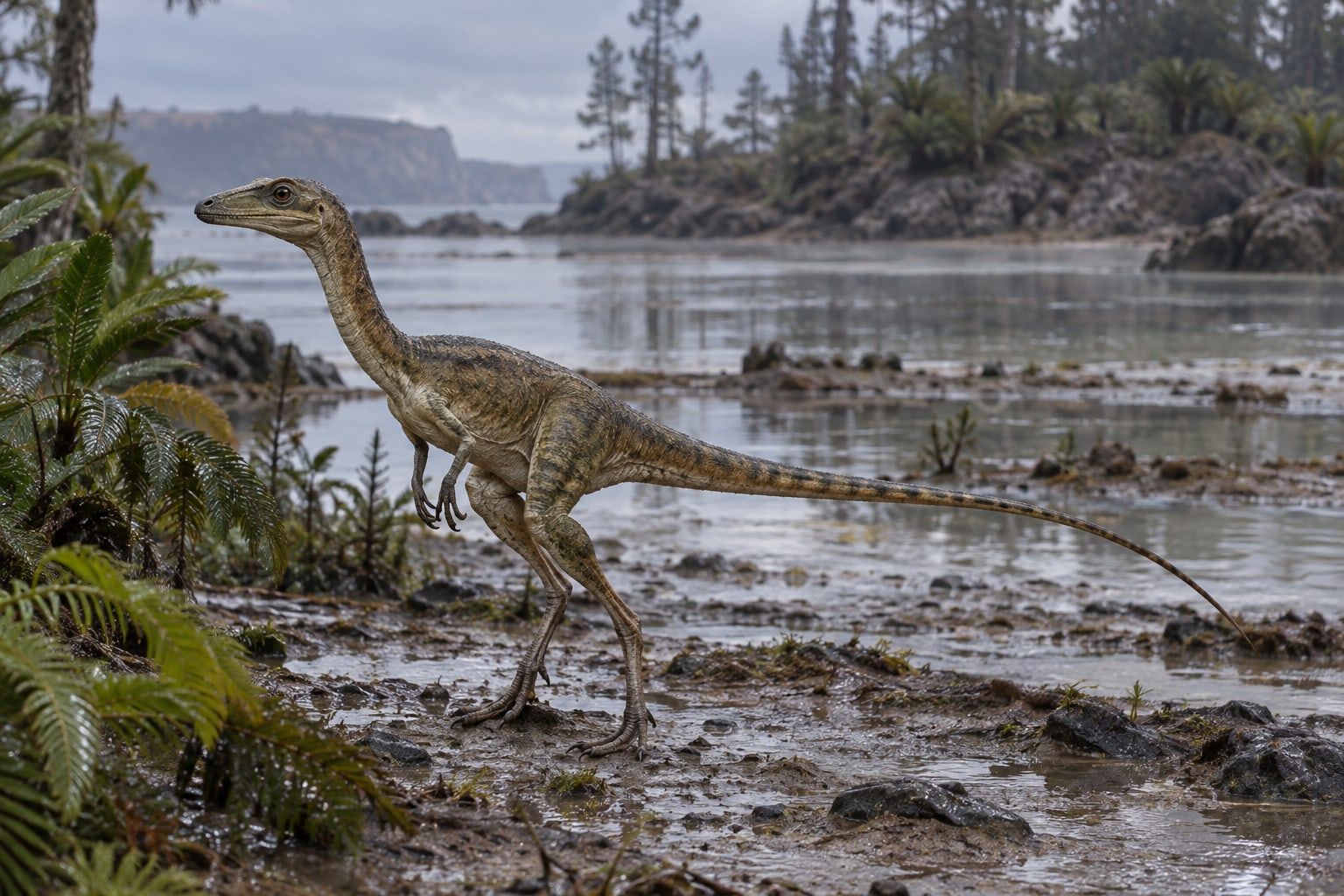
Compsognathus
komp-SOG-nuh-thus
"elegant jaw"
DV-0019
- Lived
- 155 to 145 million years ago, Late Jurassic
- Diet
- Carnivore
- Length
- about 1 m (3 ft)
- Group
- Theropods, Compsognathidae
- Found in
- France, Germany and Portugal
- Named by
- Wagner 1861
Field notes
About Compsognathus
What it was like
Compsognathus was one of the smallest dinosaurs known, roughly the size of a chicken, and it grew to about 1 meter (3 feet) long including its tail. It walked on two long, slender legs and had small, grasping hands with sharp claws.
Its skull was light and narrow, with small sharp teeth suited for catching quick, small prey. Fossils of both known skeletons preserve the remains of small lizards in the stomach area, showing what this little hunter actually ate.
Its world
Compsognathus lived from about 155 to 145 million years ago, during the Late Jurassic, in what is now France, Germany, and Portugal. Its fossils come from formations including Alcobaça and Painten.
It lived alongside much larger dinosaurs, including the plant eaters Camarasaurus and Dacentrurus, as well as smaller theropods such as Aviatyrannis and Juravenator. Its small size and light frame suited a warm environment with plenty of low cover to dart through while hunting.
How it was found
Wagner named Compsognathus in 1861, making it one of the first dinosaurs known from a fairly complete skeleton. About 4 finds are known today, and its closest relatives, including Sinocalliopteryx and Huaxiagnathus, were also small, fast-moving theropods.
The evidence
Where its fossils were found
Today
150 million years ago
To scale
How big was Compsognathus?
Lived alongside
Found in the same rock formations.
Close relatives
Other members of Compsognathidae.
Sources: Paleobiology Database, WikidataNamed in: J. A. Wagner. 1861. Neue Beiträge zur Kenntniss der urweltlichen Fauna des lithographischen Schiefers [New contributions to the knowledge of the ancient fauna of the lithographic slates]. Abhandlungen der königlichen bayerische Akademie der Wissenschaft, II Classe 9(1):65-124