Megaraptor
MEG-ah-RAP-tor
"giant thief"
DV-0419
- Lived
- 94 to 86 million years ago, Late Cretaceous
- Diet
- Carnivore
- Group
- Theropods, Megaraptoridae
- Found in
- Argentina
- Named by
- Novas 1998
Field notes
About Megaraptor
What it was like
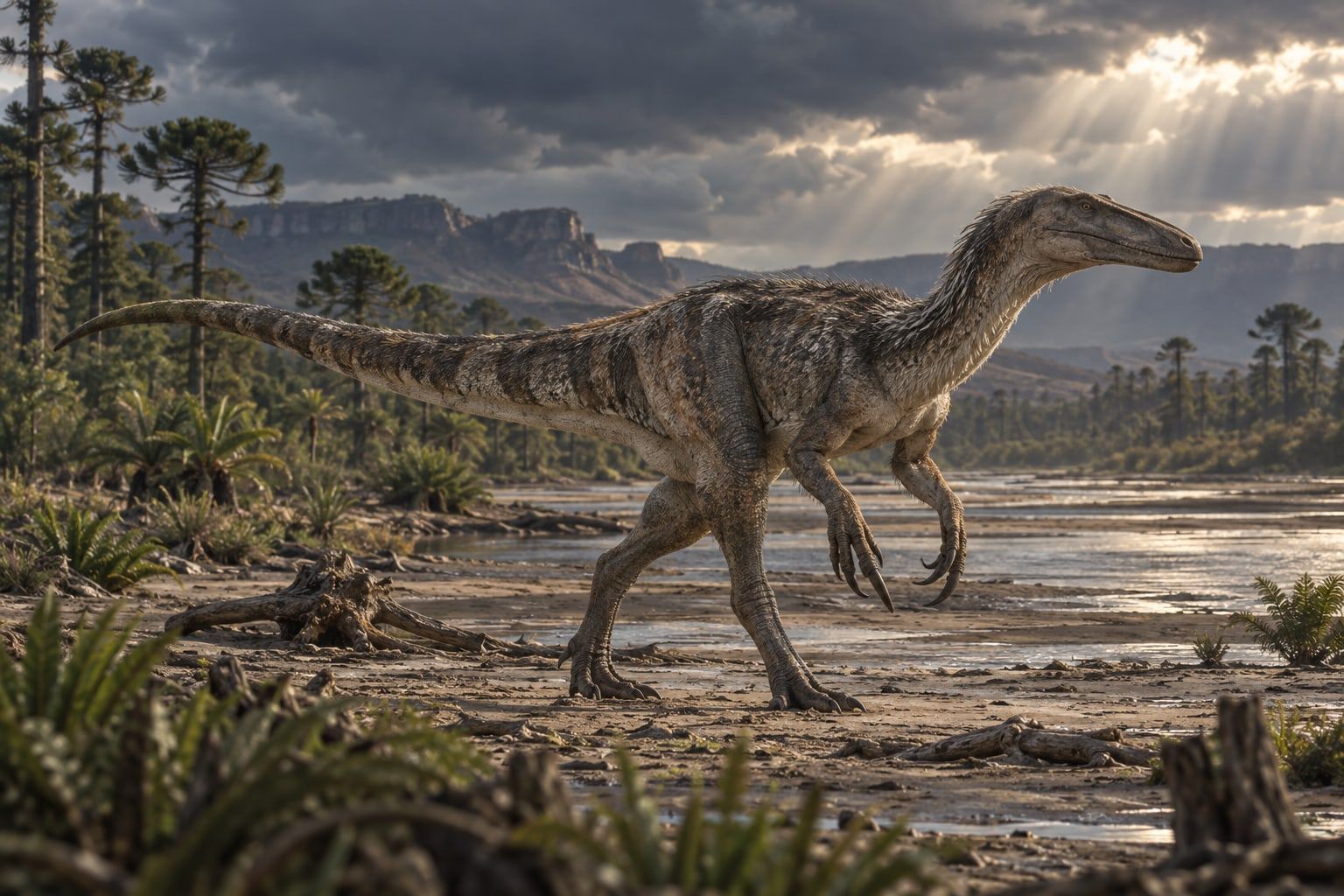
Megaraptor is best known for its huge, strongly curved hand claws, among the largest of any theropod. When it was first described, paleontologists thought the claw came from the foot and pictured Megaraptor as a giant relative of Velociraptor. Later discoveries showed the claw actually belonged to the hand.
Since then, scientists have kept revising where Megaraptor fits on the dinosaur family tree, and where exactly the group it named, the megaraptorans, belongs is still debated. Its long, low skull and small eye sockets in known juvenile remains suggest it grew a deeper, sturdier skull as an adult, and it probably used its powerful arms and claws to grab prey.
Its world
Megaraptor lived from about 94 to 86 million years ago, in the Late Cretaceous, in what is now Argentina. Its fossils come from the Portezuelo Formation.
It shared its river habitat with the giant sauropod Futalognkosaurus, the small hunters Unenlagia, Neuquenraptor, and Patagonykus, and other local dinosaurs such as Pamparaptor, Elemgasem, and Baalsaurus.
How it was found
Novas named Megaraptor in 1998, and only about three fossil finds of the genus are known, most of them fragmentary. Even so, it gave its name to an entire group of similar clawed predators found across South America and beyond, including relatives such as Australovenator and Orkoraptor.
The evidence
Where its fossils were found
Today
90 million years ago
Lived alongside
Found in the same rock formations.
Close relatives
Other members of Megaraptoridae.
Sources: Paleobiology Database, WikidataNamed in: F. E. Novas. 1998. Megaraptor namunhuaiquii, gen. et sp. nov., a large-clawed, Late Cretaceous theropod from Patagonia. Journal of Vertebrate Paleontology 18(1):4-9