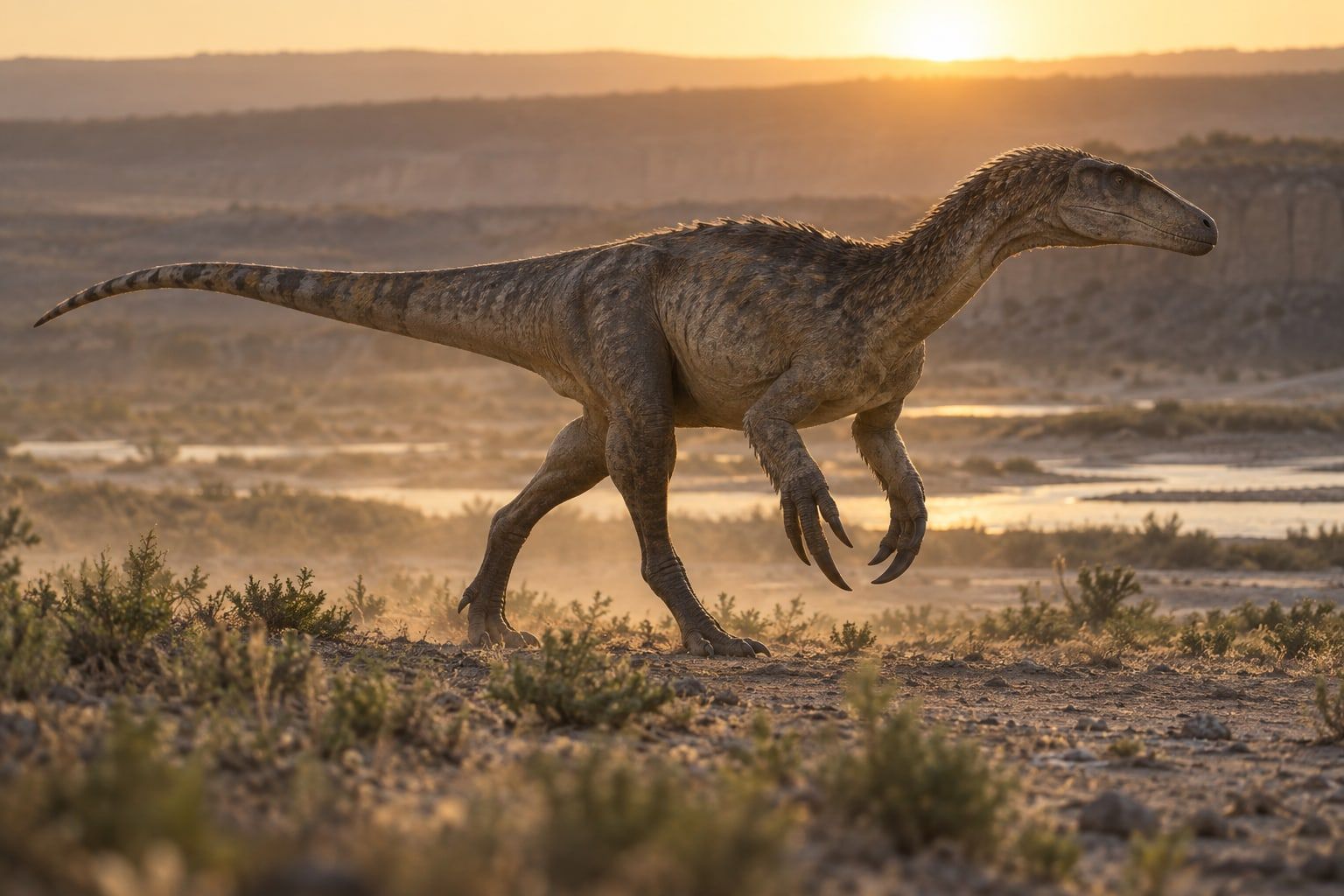
Joaquinraptor
DV-1280 · type species Joaquinraptor casali
- Lived
- 72 to 66 million years ago, Late Cretaceous
- Diet
- Carnivore
- Group
- Theropods, Megaraptoridae
- Found in
- Argentina
- Named by
- Ibiricu et al. 2025
Field notes
About Joaquinraptor
What it was like
Joaquinraptor was a carnivorous theropod belonging to the megaraptorids, a group of predators best known for the long, curved claws on their hands. Like its relatives, it probably used these claws as much as its teeth when attacking prey. It is known from a single partial skeleton, still being studied, so many details of its full size and appearance are not yet settled.
Its world
Joaquinraptor lived in what is now Argentina between about 72 and 66 million years ago, right at the end of the Cretaceous. It shared its habitat with long-necked sauropods such as Aeolosaurus and Argyrosaurus, as well as the horned Notoceratops. As one of the last known megaraptorids, it lived alongside relatives such as Maip and Orkoraptor elsewhere in South America.
How it was found
Ibiricu and colleagues named Joaquinraptor in 2025, based on fossils from the Lago Colhué Huapi Formation. Being so newly described, much about its biology is still being worked out.
The evidence
Where its fossils were found
Today
70 million years ago
Lived alongside
Found in the same rock formations.
Close relatives
Other members of Megaraptoridae.
Sources: Paleobiology Database, WikidataNamed in: L. M. Ibiricu, M. C. Lamanna, and B. N. Alvarez, I. A. Cerda, J. L. Caglianone, N. V. Cardozo, M. Luna, R. D. Martínez. 2025. Latest Cretaceous megaraptorid theropod dinosaur sheds light on megaraptoran evolution and palaeobiology. Nature Communications 16(8298):8298:1-18