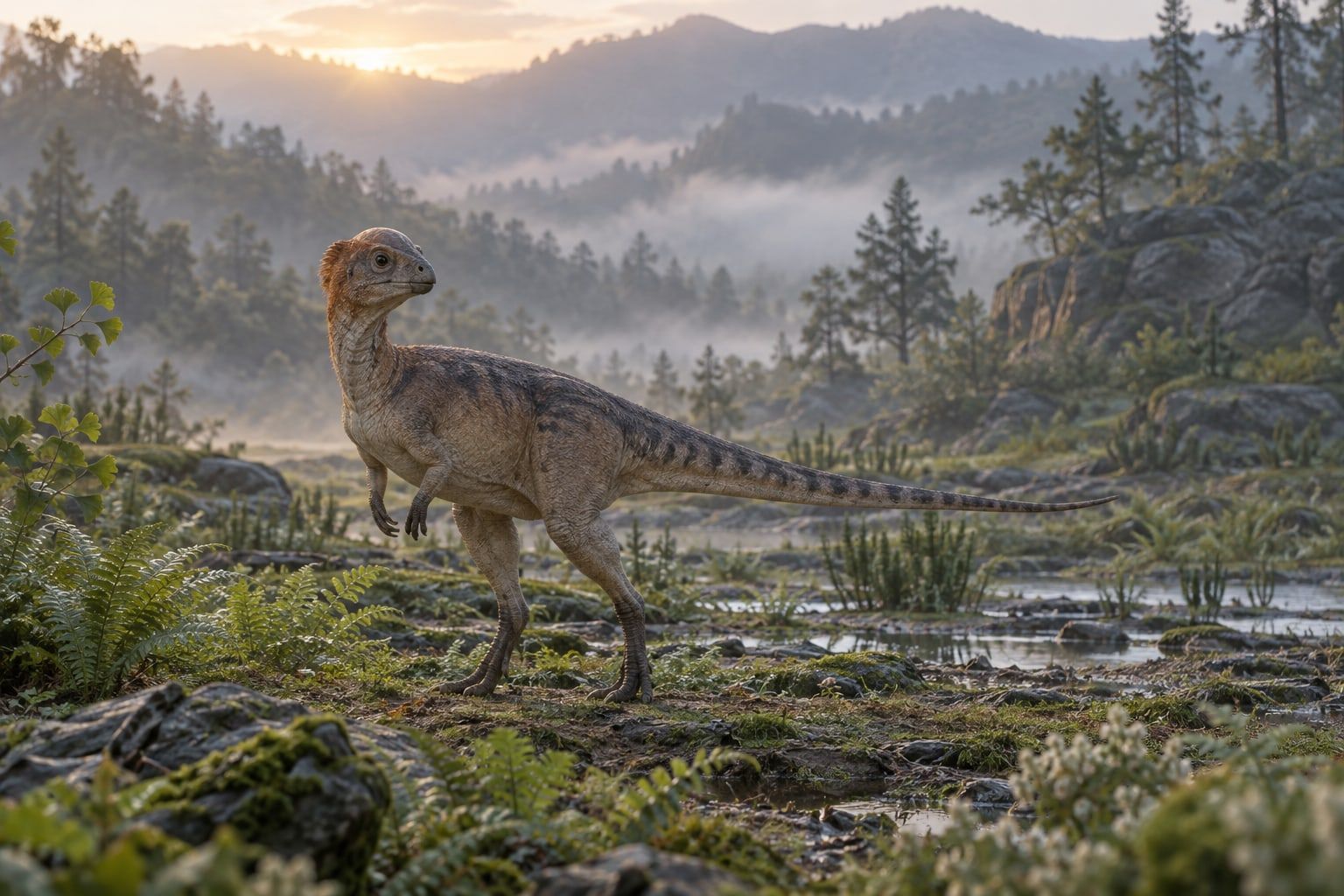
Micropachycephalosaurus
"small thick-headed lizard"
DV-0247
- Lived
- 90 to 84 million years ago, Late Cretaceous
- Diet
- Herbivore
- Length
- about 0.6 m (2 ft)
- Group
- Ceratopsians
- Found in
- China
- Named by
- Dong 1978
Field notes
About Micropachycephalosaurus
What it was like
Micropachycephalosaurus was a small, plant-eating dinosaur belonging to the ceratopsian branch of the dinosaur family tree, though it lacked the horns and bony frill of relatives like Triceratops. It measured only about 0.6 meters (2 feet) long, making it one of the smallest dinosaurs known from its group. Its genus name is famously long, among the longest given to any dinosaur, which stands in odd contrast to its tiny size. Some early studies linked it to the thick-skulled pachycephalosaurs because of that name, but it is now generally classified among the early ceratopsians instead.
Its world
Micropachycephalosaurus lived in what is now China during the Late Cretaceous, between about 90 and 84 million years ago. Fossils place it alongside the hadrosaur Tanius in the same habitat, where it would have needed to stay alert for far larger predators sharing the landscape.
How it was found
Dong named Micropachycephalosaurus in 1978, based on fossils from the Jiangjunding Formation. Only a single specimen is known, so scientists still have limited information about how it lived and how it relates to other early ceratopsians such as Psittacosaurus.
The evidence
Where its fossils were found
Today
90 million years ago
To scale
How big was Micropachycephalosaurus?
Lived alongside
Found in the same rock formations.
Close relatives
Other members of Ceratopsia.
Sources: Paleobiology Database, WikidataNamed in: Z. Dong. 1978. [A new genus of Pachycephalosauria from Laiyang, Shantung]. Vertebrata PalAsiatica 16(4):225-228