Psittacosaurus
sit-AK-oh-SORE-us
"parrot lizard"
DV-0117
- Lived
- 143 to 101 million years ago, Early Cretaceous
- Diet
- Herbivore
- Length
- about 2 m (7 ft)
- Group
- Ceratopsians
- Found in
- China, Mongolia and Russia
- Named by
- Osborn 1923
Field notes
About Psittacosaurus
What it was like
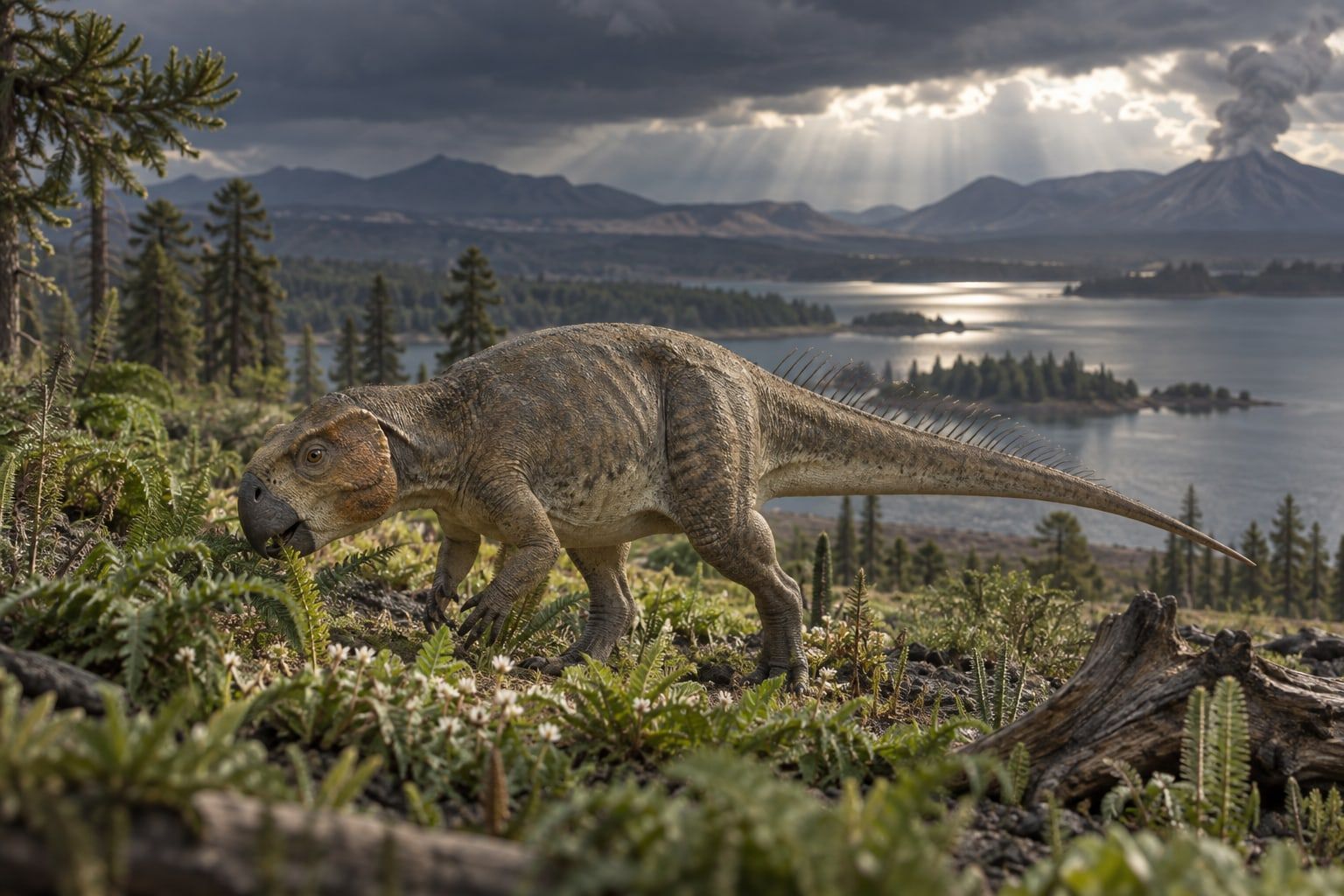
Psittacosaurus was a small plant eater with a deep, parrot-like beak and a robust skull. It grew to about 2 meters (6.6 feet) long, and most species stood and walked on two legs as adults.
One remarkable fossil preserves long, bristle-like filaments growing from the top of its tail, a feature not seen in most other dinosaurs. Psittacosaurus probably had good senses of smell and sight, and may have been active at different times of day.
Its world
Psittacosaurus lived from about 143 to 101 million years ago, in the Early Cretaceous, across what is now China, Mongolia, and Russia, with possible remains also reported from Thailand. Its fossils come from several formations, including Yixian, Jiufotang, Ilek, Öösh, Ejinhoro, and Doushan.
It shared its world with feathered theropods such as Yutyrannus, Sinosauropteryx, Sinornithosaurus, and Microraptor, as well as the armored Wuerhosaurus and the clawed Beipiaosaurus.
How it was found
Osborn named Psittacosaurus in 1923. More species have been named within Psittacosaurus than any other dinosaur genus, and about 66 fossil finds are known in total, including many complete skeletons and individuals of different ages. This makes it one of the best-studied dinosaurs for understanding how dinosaurs grew from hatchlings into adults. It is considered a close relative of other early ceratopsians such as Albalophosaurus and Micropachycephalosaurus.
The evidence
Where its fossils were found
Today
120 million years ago
To scale
How big was Psittacosaurus?
Lived alongside
Found in the same rock formations.
Close relatives
Other members of Ceratopsia.
Sources: Paleobiology Database, WikidataNamed in: H. F. Osborn. 1923. Two Lower Cretaceous dinosaurs of Mongolia. American Museum Novitates 95:1-10