Rapetosaurus
DV-0493
- Lived
- 101 to 66 million years ago, Late Cretaceous
- Diet
- Herbivore
- Group
- Sauropods
- Found in
- Madagascar
- Named by
- Curry Rogers and Forster 2001
Field notes
About Rapetosaurus
What it was like
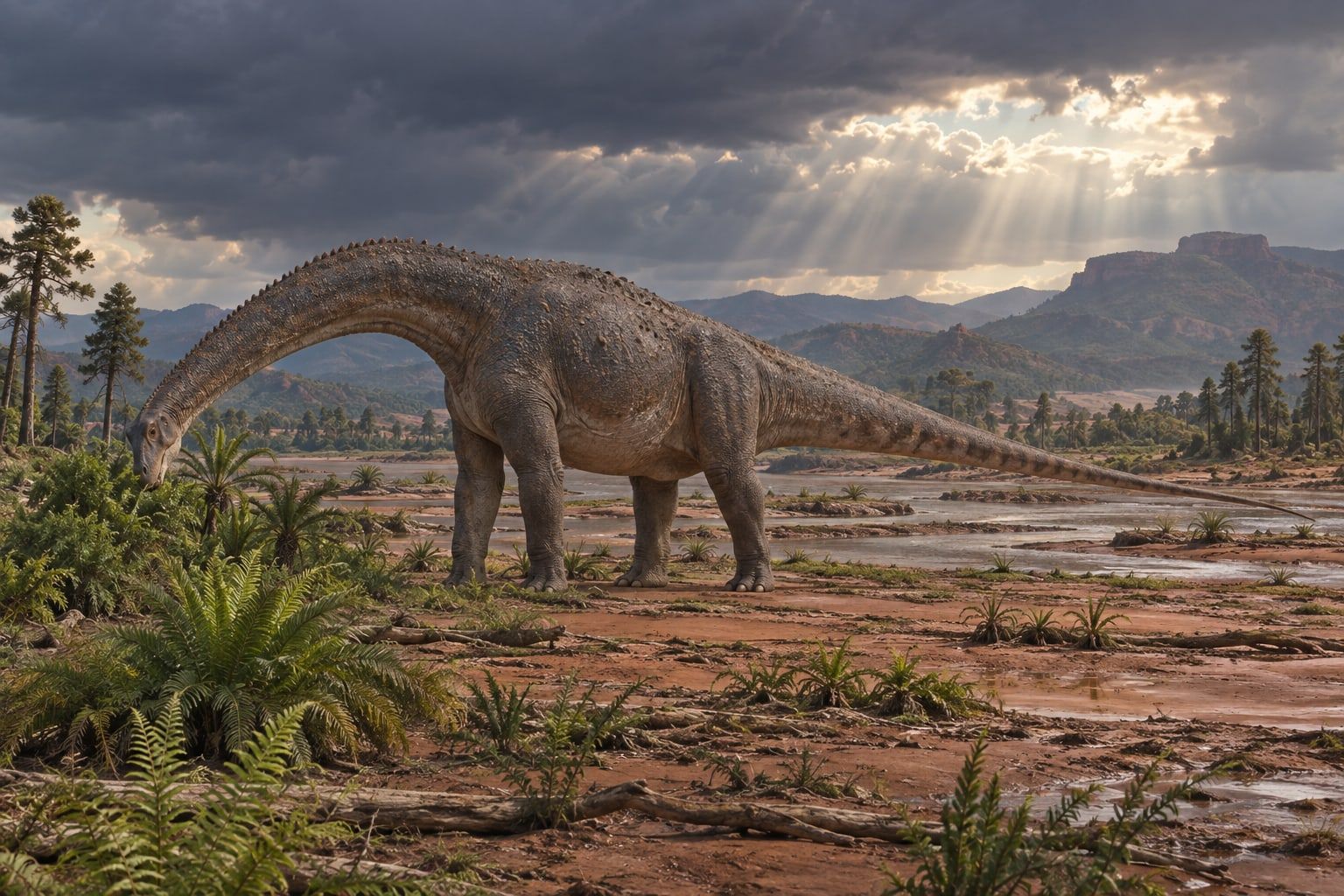
Rapetosaurus was a long-necked, plant-eating titanosaur, walking on four thick, column-like legs like other sauropods. It is unusually well known for a titanosaur because several skulls have been found, a rare thing for this group since sauropod skulls are lightly built and easily lost before fossilization. Its head was small compared to its body, with peg-like teeth suited to stripping leaves from plants. Its exact adult size remains uncertain, as is common for sauropods known mostly from partial skeletons.
Its world
Rapetosaurus lived from about 101 to 66 million years ago, during the Late Cretaceous, in what is now Madagascar. Its fossils come from the Maevarano Formation, where it shared its world with the predator Majungasaurus, the small theropod Masiakasaurus, the bird-like Rahonavis, and the fellow titanosaur Vahiny.
How it was found
Curry Rogers and Forster named Rapetosaurus in 2001. Five fossil finds are known today, including skull material that has made Rapetosaurus one of the best studied titanosaurs, helping fill in gaps in what is known about how these giant sauropods' heads were built. Before this, many titanosaurs around the world were known only from scattered bones, so a well preserved skeleton like this was especially valuable to paleontologists studying this diverse group of sauropods.
The evidence
Where its fossils were found
Today
80 million years ago
Lived alongside
Found in the same rock formations.
Close relatives
Other members of Saltasauroidea.
Sources: Paleobiology Database, WikidataNamed in: K. A. Curry Rogers and C. A. Forster. 2001. The last of the dinosaur titans: a new sauropod from Madagascar. Nature 412:530-534