Brachiosaurus
BRAK-ee-oh-SORE-us
"arm lizard"
DV-0069 · type species Brachiosaurus altithorax
- Lived
- 155 to 143 million years ago, Late Jurassic to Early Cretaceous
- Diet
- Herbivore
- Length
- about 21 m (69 ft)
- Group
- Sauropods, Brachiosauridae
- Found in
- United States
- Named by
- Riggs 1903
Field notes
About Brachiosaurus
What it was like
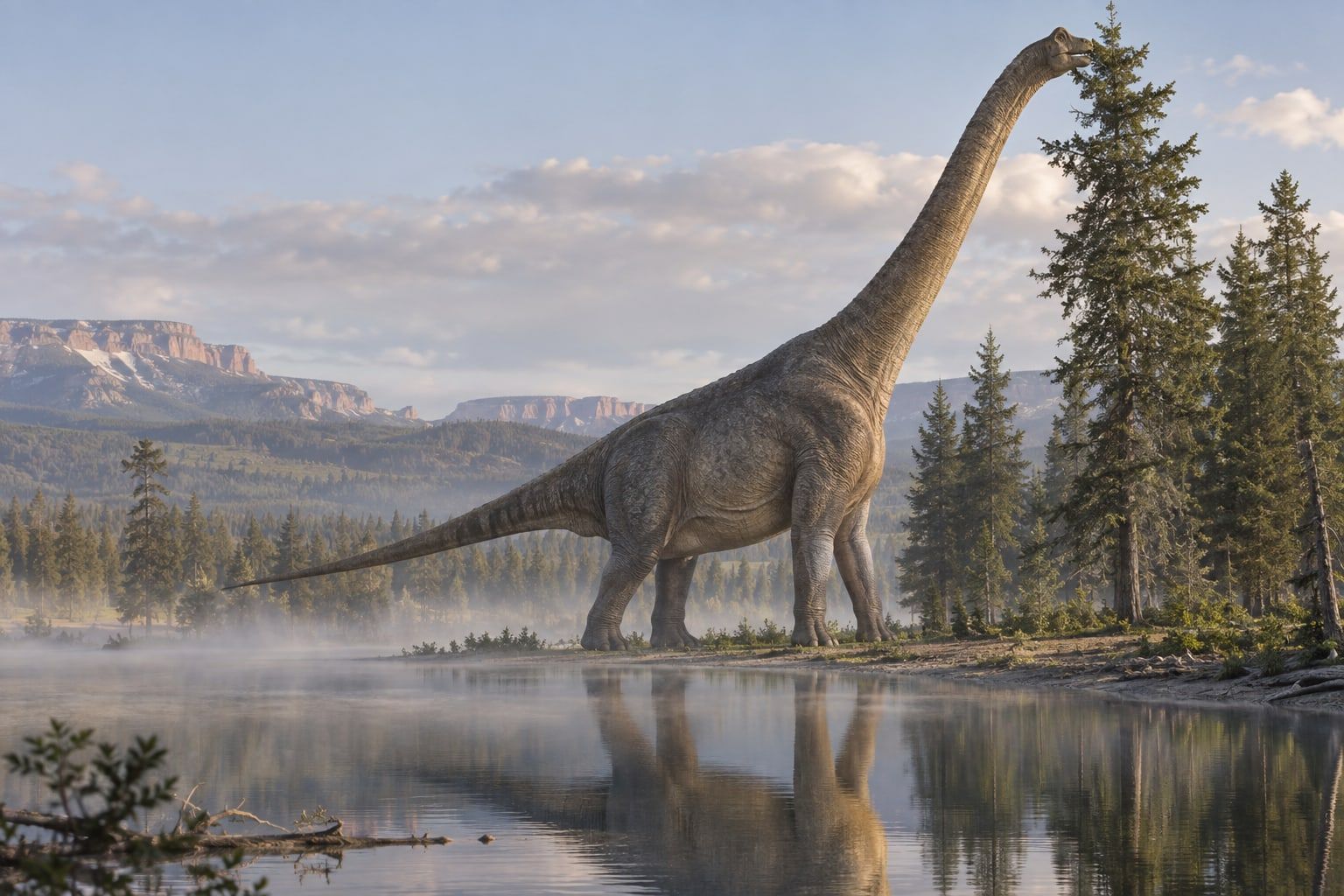
Brachiosaurus was a giant plant eater with a long neck and a small head. Unlike most sauropods, its front legs were longer than its back legs, which gave its back a steep, sloped shape. It grew up to about 21 meters (69 feet) long.
Its long neck let it reach leaves high up in trees that shorter plant eaters could not touch. Brachiosaurus was not built for rearing up on its hind legs the way some other sauropods may have been.
Its world
Brachiosaurus lived from about 155 to 143 million years ago, spanning the Late Jurassic and Early Cretaceous, in what is now the western United States, with possible fossils also reported from Zimbabwe. Its bones come from the Morrison Formation, alongside Stegosaurus, Allosaurus, Diplodocus, and Apatosaurus.
How it was found
Riggs named Brachiosaurus in 1903, choosing a name that means arm lizard for its long forelimbs. Only about 11 fossil finds of the genus are known, so it remains one of the rarer sauropods of its time and place, and much about its life is still uncertain.
The evidence
Where its fossils were found
Today
150 million years ago
To scale
How big was Brachiosaurus?
 Play and learnColor it in: a printable Brachiosaurus coloring pageFree to print or download.
Lived alongside
Found in the same rock formations.
Close relatives
Other members of Brachiosauridae.
Sources: Paleobiology Database, WikidataNamed in: E. S. Riggs. 1903. Brachiosaurus altithorax, the largest known dinosaur. American Journal of Science, series 4 15:299-306