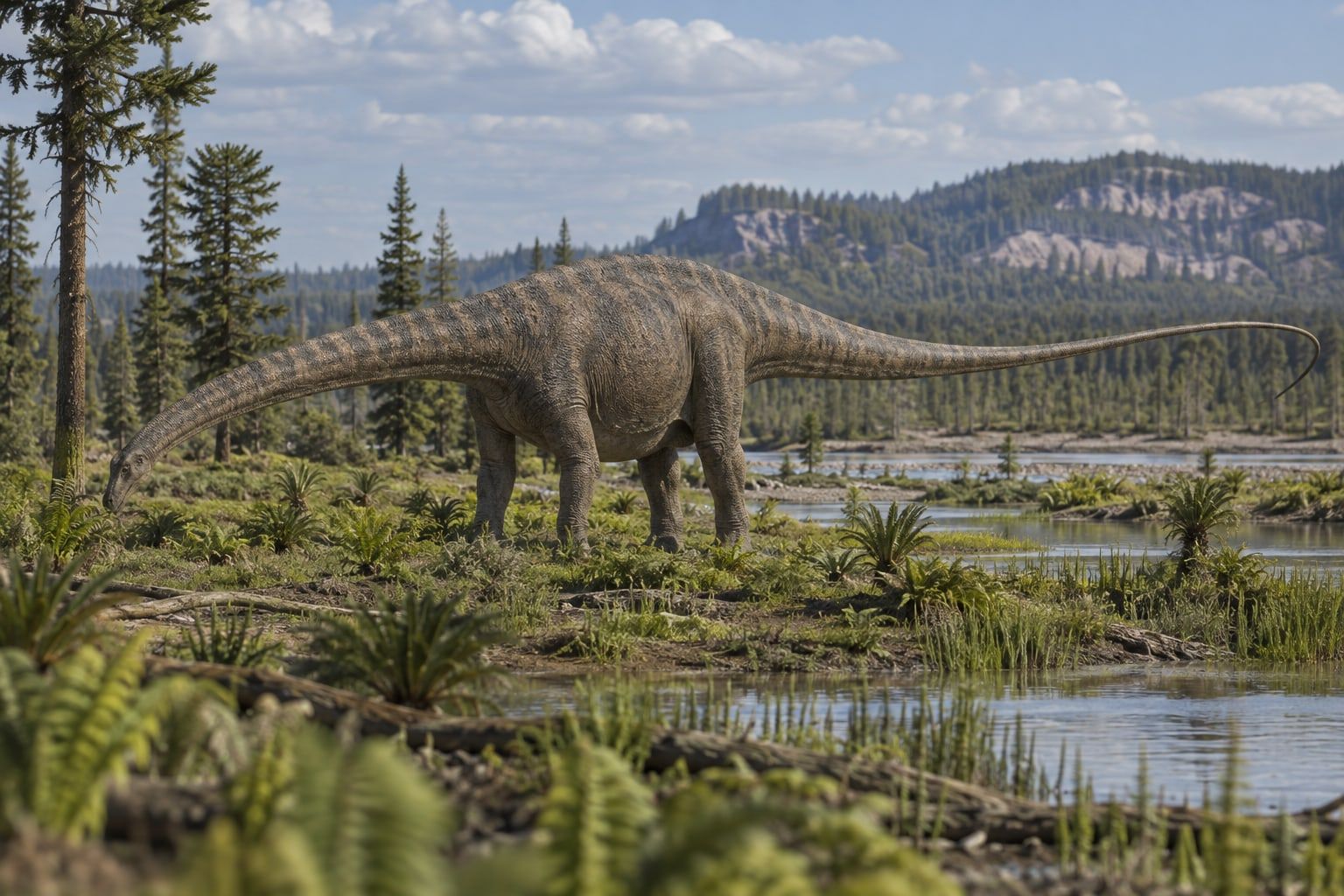
Diplodocus
dih-PLOD-uh-kus
"double beam"
DV-0039 · type species Diplodocus longus
- Lived
- 155 to 143 million years ago, Late Jurassic to Early Cretaceous
- Diet
- Herbivore
- Length
- about 26 m (85 ft)
- Weight
- about 13 metric tons (14 short tons)
- Group
- Sauropods, Diplodocidae
- Found in
- United States
- Named by
- Marsh 1878
Field notes
About Diplodocus
A body built for length
Diplodocus was one of the longest dinosaurs known, stretching about 26 meters, or roughly 85 feet, from its small head to the tip of its whip-like tail. It may have weighed around 13,000 kilograms, but most of its length was neck and tail rather than body. Its skull was long and low, with peg-shaped teeth at the front for stripping leaves off branches, and its nostrils sat high on its head. Despite its size, its bones were lightly built, with air spaces that kept the skeleton lighter than it looks.
Its world
Diplodocus lived during the Late Jurassic, between about 155 and 143 million years ago, across what is now Wyoming, Colorado, Utah, Oklahoma, Montana, and New Mexico. It is known from 62 separate fossil finds, most of them from the Morrison Formation, one of the richest fossil beds from this period. Diplodocus shared its world with fellow sauropods Brontosaurus, Apatosaurus, Brachiosaurus, and Camarasaurus, the armored Stegosaurus, and predators such as Allosaurus, Ceratosaurus, and Torvosaurus.
How it was found
Marsh named Diplodocus in 1878, taking the name from the double-beamed chevron bones under its tail. The type species is Diplodocus longus. With dozens of fossil finds to work from, Diplodocus is among the best-studied sauropods known today.
The evidence
Where its fossils were found
Today
150 million years ago
To scale
How big was Diplodocus?
 Play and learnColor it in: a printable Diplodocus coloring pageFree to print or download.
Lived alongside
Found in the same rock formations.
Close relatives
Other members of Diplodocidae.
- BrontosaurusLate Jurassic to Early Cretaceous
- ApatosaurusLate Jurassic to Early Cretaceous
- SupersaurusLate Jurassic to Early Cretaceous
- BarosaurusLate Jurassic to Early Cretaceous
- GaleamopusLate Jurassic to Early Cretaceous
- TornieriaLate Jurassic to Early Cretaceous
- ArdetosaurusLate Jurassic
- LeinkupalEarly Cretaceous
Sources: Paleobiology Database, WikidataNamed in: O. C. Marsh. 1878. Principal characters of American Jurassic dinosaurs. Part I. American Journal of Science and Arts 16:411-416