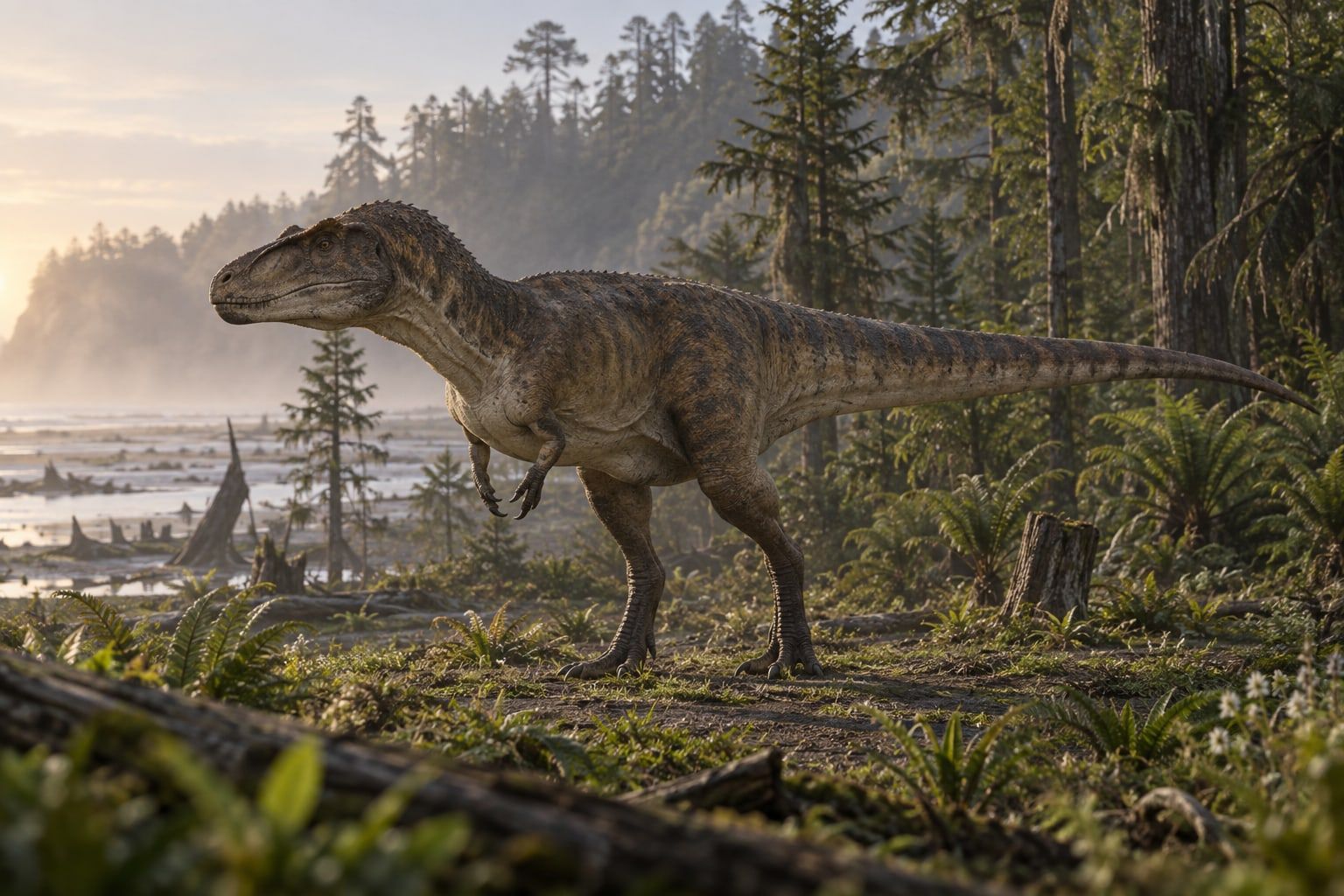
Dryptosaurus
DRIP-toh-SORE-us
"tearing lizard"
DV-0035
- Lived
- 113 to 66 million years ago, Early Cretaceous to Late Cretaceous
- Diet
- Carnivore
- Length
- about 6.4 m (21 ft)
- Group
- Theropods
- Found in
- United States
- Named by
- Marsh 1877
Field notes
About Dryptosaurus
What it was like
Dryptosaurus was an early relative of the tyrannosaurs, but unlike its later cousins Tyrannosaurus and Tarbosaurus, it kept large forelimbs tipped with big, curved claws rather than tiny arms. It grew to about 6.4 meters (21 feet) long and walked on two legs, with sharp, blade-like teeth suited to slicing flesh.
Because only a fragmentary skeleton is known, much of its exact appearance is pieced together by comparing it with better-known relatives.
Its world
Fossils linked to Dryptosaurus span a wide stretch of time, from about 113 to 66 million years ago, covering the Early and Late Cretaceous, though the most complete remains come from the Late Cretaceous of New Jersey, with other fragmentary fossils reported as far away as Texas. Its bones come from the Merchantville, New Egypt, and Paluxy formations.
In New Jersey it lived alongside the plant eater Tenontosaurus and the sauropods Cedarosaurus and Astrophocaudia, in a coastal setting where sharks and other marine animals are also found in the same rocks.
How it was found
Marsh named Dryptosaurus in 1877, based on fossils dug up by fertilizer miners in New Jersey. Only about three fossil finds are linked to the genus, and because they are so incomplete, Dryptosaurus remains one of the more mysterious dinosaurs known from the eastern United States.
The evidence
Where its fossils were found
Today
90 million years ago
To scale
How big was Dryptosaurus?
Lived alongside
Found in the same rock formations.
Close relatives
Other members of Tyrannosauroidea.
Sources: Paleobiology Database, WikidataNamed in: O. C. Marsh. 1877. Notice of a new and gigantic dinosaur. American Journal of Science and Arts 14:87-88