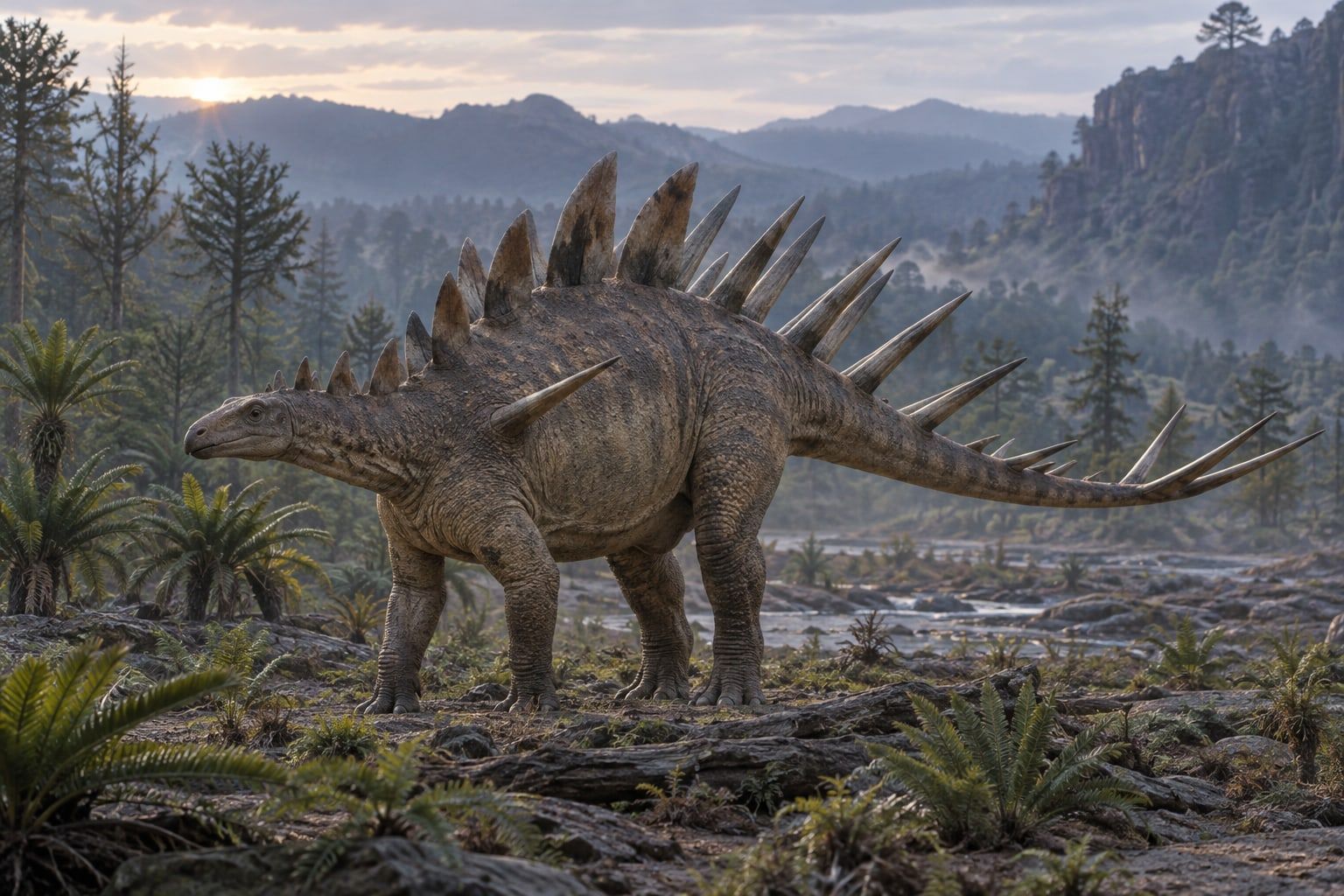
Kentrosaurus
KEN-tro-SORE-us
"prickle lizard"
DV-0098
- Lived
- 152 to 143 million years ago, Late Jurassic to Early Cretaceous
- Diet
- Herbivore
- Length
- about 5 m (16 ft)
- Group
- Stegosaurs, Stegosauridae
- Found in
- Tanzania
- Named by
- Hennig 1915
Field notes
About Kentrosaurus
What it was like
Kentrosaurus was a plant eater covered in rows of bony plates and spikes running from its neck to the tip of its tail. It walked on all four legs and grew to about 5 meters (16 feet) long, smaller than its famous relative Stegosaurus.
Narrow plates ran along its neck and the front of its back, gradually turning into sharp spikes over the hips and tail. A long spike jutted from each shoulder, and the tail spikes were probably used to fend off attacking predators.
Its world
Kentrosaurus lived from about 152 to 143 million years ago, spanning the Late Jurassic and Early Cretaceous, in what is now Tanzania. Its fossils come from the Tendaguru Formation.
It shared its world with the meat-eating Ceratosaurus and Torvosaurus, the giant long-necked Giraffatitan, and other plant eaters such as Dysalotosaurus and Tornieria.
How it was found
Hennig named Kentrosaurus in 1915, after bones were collected during early expeditions to Tanzania. About 26 fossil finds are now known, an unusually large number for a stegosaur, giving a fairly complete picture of the skeleton even though no single complete individual has been found. Kentrosaurus is a close relative of Stegosaurus and other plated dinosaurs in the family Stegosauridae.
The evidence
Where its fossils were found
Today
150 million years ago
To scale
How big was Kentrosaurus?
Lived alongside
Found in the same rock formations.
Close relatives
Other members of Stegosauridae.
Sources: Paleobiology Database, WikidataNamed in: E. Hennig. 1915. Kentrosaurus aethiopicus der Stegosauride des Tendaguru [Kentrosaurus aethiopicus the stegosaurid from Tendaguru]. Sitzungsberichte der Gesellschaft Naturforschender Freunde zu Berlin 1915:219-247