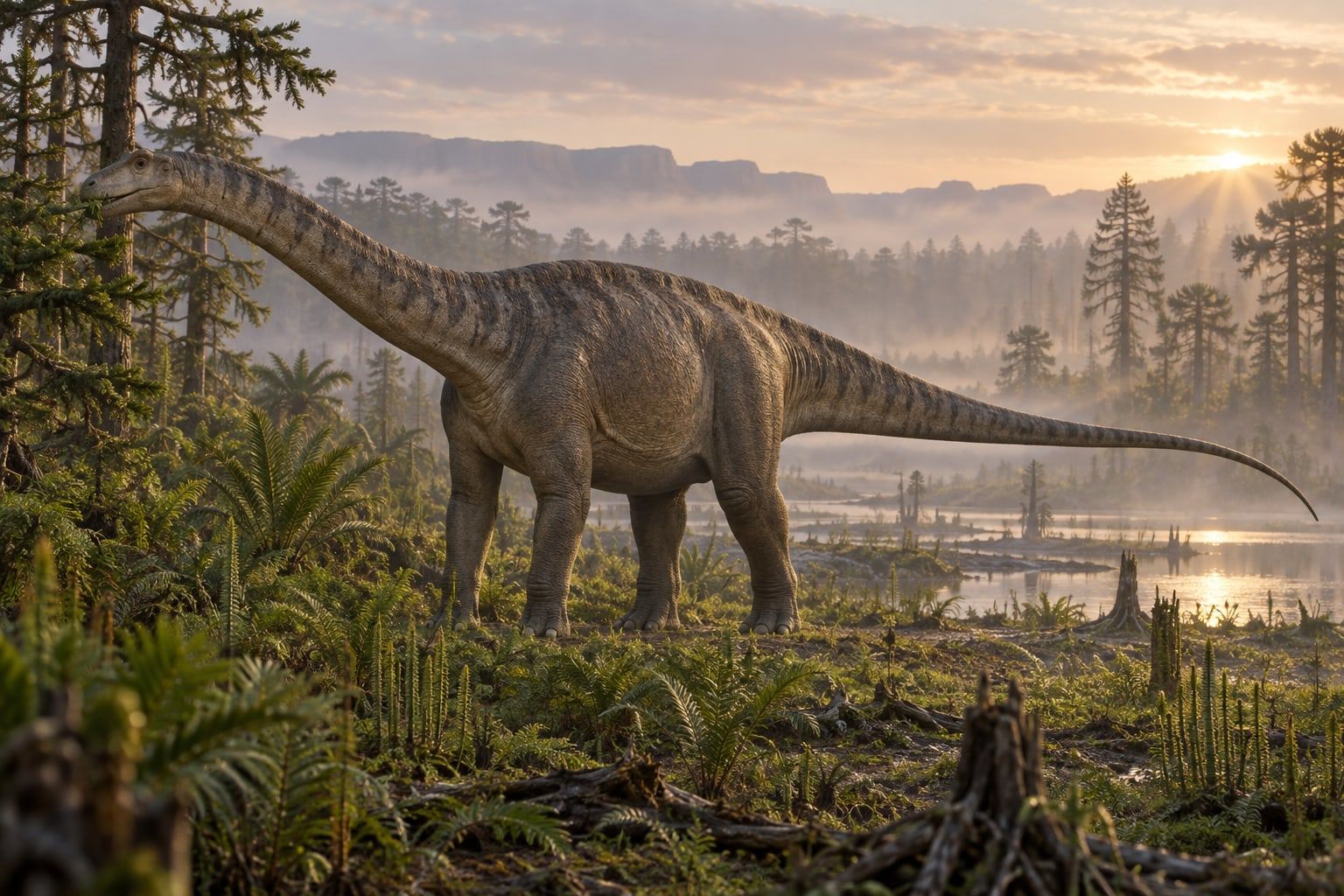
Maraapunisaurus
DV-1032
- Lived
- 149 to 143 million years ago, Late Jurassic to Early Cretaceous
- Diet
- Herbivore
- Group
- Sauropods, Rebbachisauridae
- Found in
- United States
- Named by
- Carpenter 2018
Field notes
About Maraapunisaurus
What it was like
Maraapunisaurus is known only from a single fossil bone, and even that bone no longer exists, so its size remains famously uncertain. Descriptions and drawings made when the bone was first studied suggested an enormous sauropod, possibly one of the longest animals ever to have lived, but without the original fossil to check, scientists cannot be sure how accurate those early estimates were. What is clear is that it was a plant eater with the long neck and tail typical of its group.
Its world
Maraapunisaurus lived in what is now Colorado, in the western United States, sometime between the Late Jurassic and Early Cretaceous. It shared the Morrison Formation with some of the best known dinosaurs of the age, including Stegosaurus, Allosaurus, Brachiosaurus, and Diplodocus, as well as fellow long-necked giants like Brontosaurus, Apatosaurus, and Camarasaurus.
How it was found
The original bone was collected and described more than a century ago, then lost. Carpenter named Maraapunisaurus in 2018 using the surviving notes and illustrations, and argued that the animal was a rebbachisaurid rather than the type of sauropod first assumed. Because no fossil material survives to study directly, debate over its size and true identity continues.
The evidence
Where its fossils were found
Today
145 million years ago
Lived alongside
Found in the same rock formations.
Close relatives
Other members of Rebbachisauridae.
Sources: Paleobiology Database, WikidataNamed in: K. Carpenter. 2018. Maraapunisaurus fragillimus, N.G. (Formerly Amphicoelias fragillimus), A Basal Rebbachisaurid From the Morrison Formation (Upper Jurassic) of Colorado. Geology of the Intermountain West 5:227-244