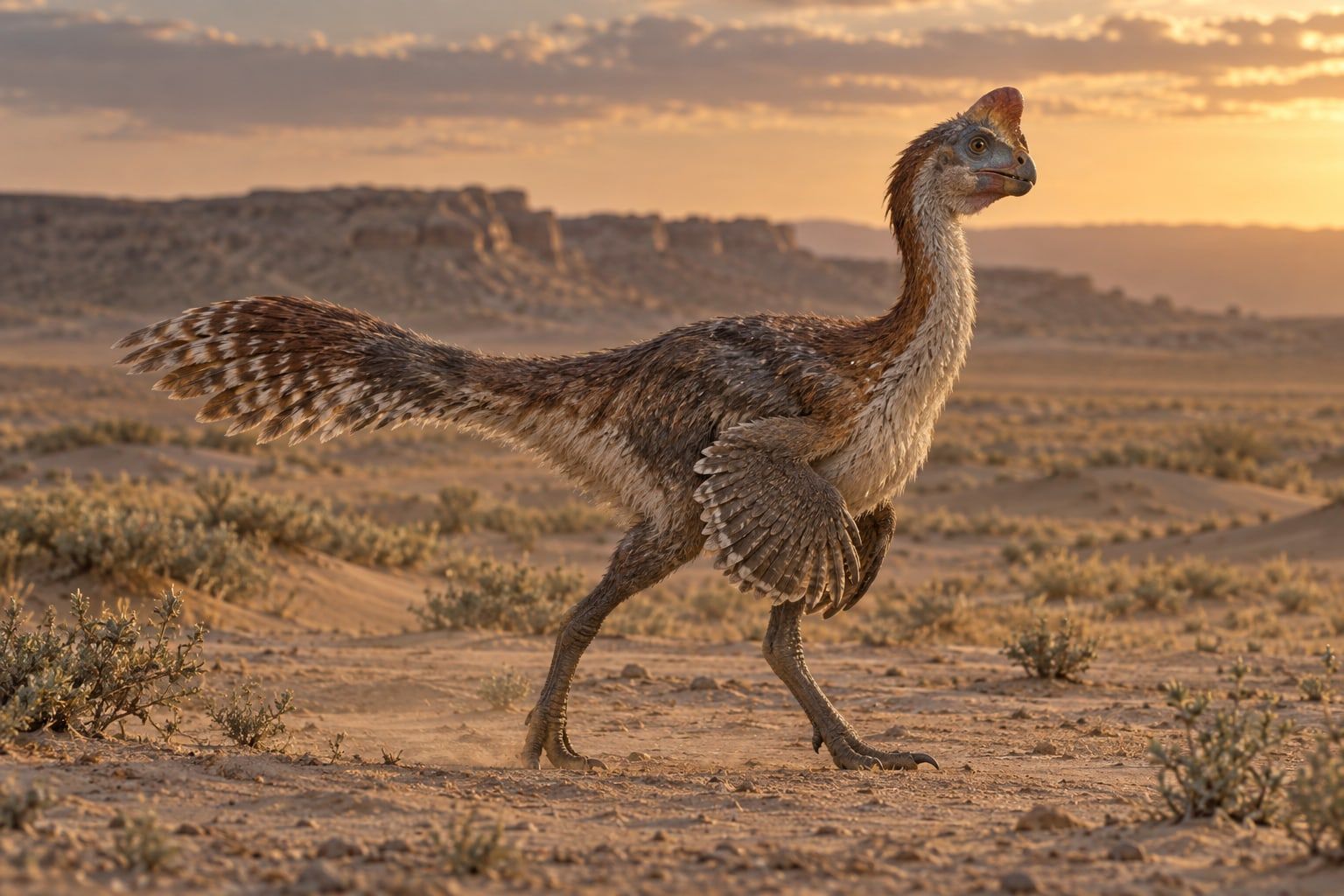
Oviraptor
OH-vih-RAP-tor
"egg thief"
DV-0124 · type species Oviraptor philoceratops
- Lived
- 84 to 72 million years ago, Late Cretaceous
- Diet
- Omnivore
- Length
- about 1.6 m (5 ft)
- Group
- Theropods, Oviraptoridae
- Found in
- Mongolia
- Named by
- Osborn 1924
Field notes
About Oviraptor
What it was like
Oviraptor was a small, feathered theropod with a short, deep skull, a toothless beak, and long arms ending in curved claws. It grew to about 1.6 meters (5.2 feet) long. It was probably an omnivore, eating small animals and plants, though its stout beak also suggests it could crack open hard food.
Its name means egg thief, given to it because the first skeleton was found lying on top of a nest of eggs, which scientists at the time assumed it had been raiding. Later discoveries of other oviraptorids preserved in the same brooding pose over their own nests showed this was a mistake: Oviraptor was probably caring for its own eggs, not stealing someone else's.
Its world
Oviraptor lived in what is now Mongolia about 84 to 72 million years ago, during the Late Cretaceous. Its remains come from the Djadokhta Formation.
It shared this desert habitat with the small predator Velociraptor, the plant-eating Protoceratops, and close relatives such as Citipati, which is also known from specimens brooding its own nest.
How it was found
Osborn named Oviraptor in 1924, based on a single partial skeleton found the year before. Despite its fame, only 1 confirmed find of the genus is known, along with a nest of about a dozen eggs found nearby.
The evidence
Where its fossils were found
Today
80 million years ago
To scale
How big was Oviraptor?
Lived alongside
Found in the same rock formations.
Close relatives
Other members of Oviraptoridae.
Sources: Paleobiology Database, WikidataNamed in: H. F. Osborn. 1924. Three new Theropoda, Protoceratops zone, central Mongolia. American Museum Novitates 144:1-12