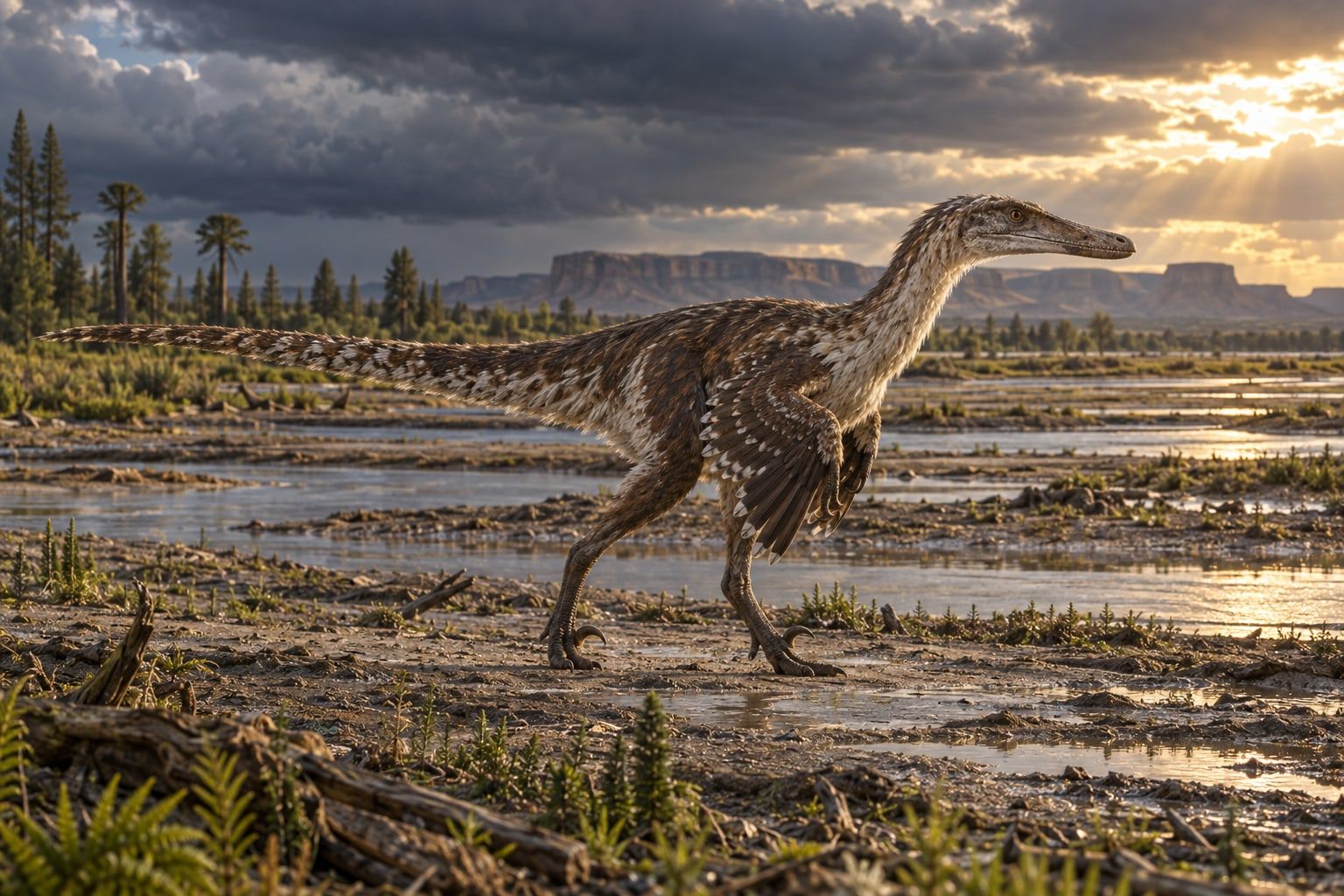
Austroraptor
AW-stro-RAP-tor
"southern thief"
DV-0653
- Lived
- 72 to 66 million years ago, Late Cretaceous
- Diet
- Carnivore
- Group
- Theropods, Dromaeosauridae
- Found in
- Argentina
- Named by
- Novas et al. 2008
Field notes
About Austroraptor
What it was like
Austroraptor was a large, ground-dwelling predator, among the biggest members of the dromaeosaurid family, sometimes called raptors. Its skull was long and low, more like that of some bigger theropods than its smaller dromaeosaurid relatives, and its arms were unusually short.
It probably hunted on two legs, using a large, curved claw on each second toe like other dromaeosaurids. No complete skeleton has been found, so many details of its exact build and proportions remain unclear.
Its world
Austroraptor lived from about 72 to 66 million years ago, in the Late Cretaceous, in what is now Argentina. Its fossils come from the Allen Formation.
It shared its world with the meat-eating Abelisaurus, the long-necked Aeolosaurus and Neuquensaurus, and the armored Patagopelta, among other animals of the region.
How it was found
Novas and colleagues named Austroraptor in 2008. Only two fossil finds have been reported for the genus so far, and its remains are still incomplete, which is why its exact size and proportions remain debated. Austroraptor belongs to the Unenlagiinae, a branch of the dromaeosaurid family found mainly in South America that also includes smaller, lighter-bodied raptors.
The evidence
Where its fossils were found
Today
70 million years ago
Lived alongside
Found in the same rock formations.
Close relatives
Other members of Dromaeosauridae.
Sources: Paleobiology Database, WikidataNamed in: F. E. Novas, D. Pol, and J. I. Canale, J. D. Porfiri, J. O. Calvo. 2008. A bizarre Cretaceous theropod dinosaur from Patagonia and the evolution of Gondwanan dromaeosaurids. Proceedings of the Royal Society B