Deinonychus
dye-NON-ih-kus
"terrible claw"
DV-0200
- Lived
- 121 to 94 million years ago, Early Cretaceous to Late Cretaceous
- Diet
- Carnivore
- Length
- about 3.4 m (11 ft)
- Group
- Theropods, Dromaeosauridae
- Found in
- United States
- Named by
- Ostrom 1969
Field notes
About Deinonychus
What it was like
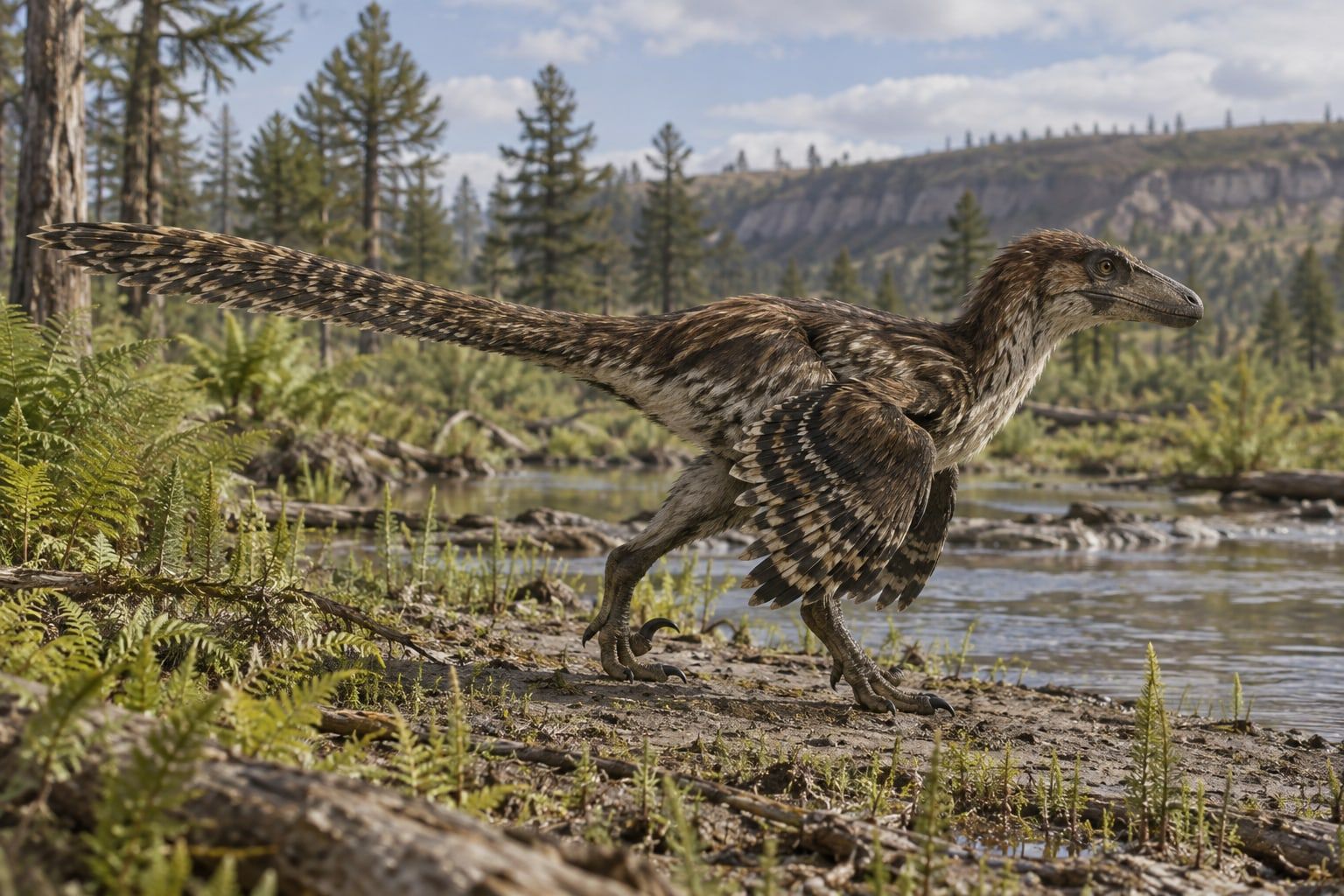
Deinonychus was a fast, sharp-eyed hunter built for speed and grip rather than brute strength. At about 3.4 meters long, it was much smaller than famous predators like Tyrannosaurus, but it carried a fearsome weapon on each foot: a large, curved, sickle-shaped claw on the second toe, held off the ground while walking or running.
Its jaws were lined with curved, serrated teeth, and its long tail was stiffened by bony rods that likely helped it balance while turning quickly or leaping onto prey. Strong arms with grasping hands suggest Deinonychus could pin down struggling prey while its feet did the rest.
Its world
Deinonychus lived across a long span of time, from about 121 to 94 million years ago, with fossils found in Montana, Wyoming, Oklahoma, Arkansas, Utah, and Maryland. Most come from the Cloverly and Antlers formations, layers of river and floodplain rock.
It shared its world with the plant-eating Tenontosaurus, the towering Sauroposeidon, the armored Gastonia, and its own close relative Utahraptor. Teeth found near Tenontosaurus bones suggest Deinonychus hunted or scavenged animals far larger than itself, possibly by working together with others of its kind.
How it was found
Deinonychus was named by Ostrom in 1969, and its discovery changed how scientists pictured dinosaurs. Before then, most people imagined dinosaurs as slow and sluggish, but the agile build of Deinonychus, with its long legs and grasping hands, pointed to an active, quick-moving animal. Paleontologists have since recorded 40 finds of the genus, more than almost any other close relative, making it one of the best-understood hunters of its kind.
The evidence
Where its fossils were found
Today
110 million years ago
To scale
How big was Deinonychus?
 Play and learnColor it in: a printable Deinonychus coloring pageFree to print or download.
Lived alongside
Found in the same rock formations.
Close relatives
Other members of Dromaeosauridae.
Sources: Paleobiology Database, WikidataNamed in: J. H. Ostrom. 1969. A new theropod dinosaur from the Lower Cretaceous of Montana. Postilla 128:1-17