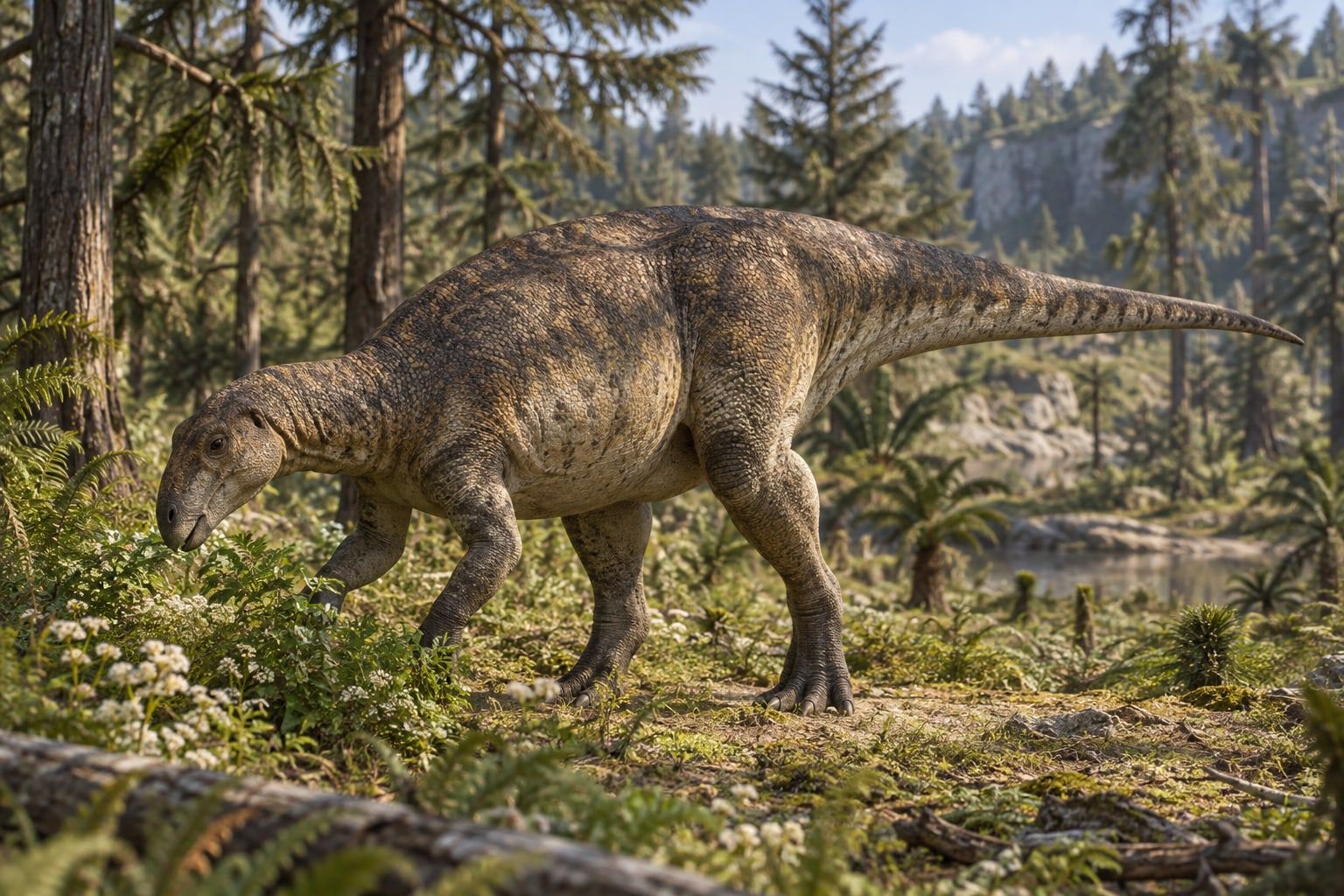
Zalmoxes
DV-0531
- Lived
- 72 to 66 million years ago, Late Cretaceous
- Diet
- Herbivore
- Length
- estimates range from 2.5 to 3 m (8 to 10 ft)
- Group
- Ornithopods
- Found in
- Romania
- Named by
- Weishampel et al. 2003
Field notes
About Zalmoxes
What it was like
Zalmoxes was a plant-eating ornithopod that walked mainly on two legs. It had ridged cheek teeth suited to grinding tough plants, and a beak at the front of the jaws for cropping them. Zalmoxes grew to between 2.5 and 3 meters (8 to 10 feet) long, smaller than many of its ornithopod relatives found elsewhere in the world.
Its world
Zalmoxes lived from about 72 to 66 million years ago, during the Late Cretaceous, on an island in the Tethys sea, in what is now Romania, with related remains also reported from Austria. Alongside it lived other animals adapted to island life, including the small sauropod Magyarosaurus, the duck-billed Telmatosaurus, and the armored Struthiosaurus, all of which were smaller than their mainland relatives.
How it was found
Weishampel and colleagues named Zalmoxes in 2003. Thirty-eight fossil finds are known today, making Zalmoxes one of the more common dinosaurs known from this part of Cretaceous Europe. Its remains, along with those of the animals living alongside it, have helped paleontologists understand how island life shaped the size of the dinosaurs living there. Because so many specimens have been recovered, Zalmoxes has become one of the better studied examples of dwarfism among dinosaurs.
The evidence
Where its fossils were found
Today
70 million years ago
Lived alongside
Found in the same rock formations.
Close relatives
Other members of Rhabdodontoidea.
Sources: Paleobiology Database, WikidataNamed in: D. B. Weishampel, C.-M. Jianu, and Z. Csiki, D. B. Norman. 2003. Osteology and phylogeny of Zalmoxes (n. g.), an unusual euornithopod dinosaur from the latest Cretaceous of Romania. Journal of Systematic Palaeontology 1(2):65-123