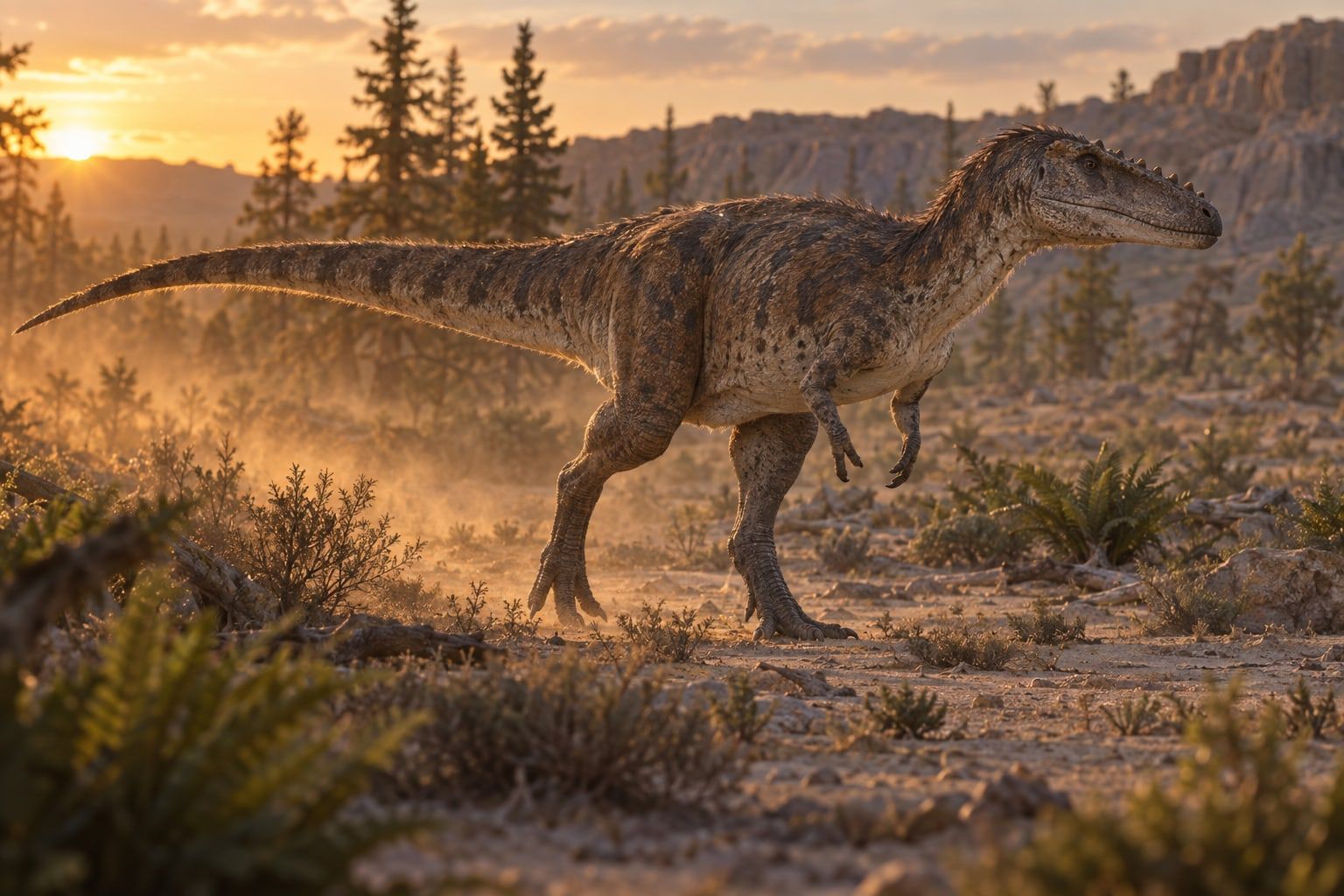
Alioramus
AL-ee-oh-RAY-mus
"different branch"
DV-0232 · type species Alioramus remotus
- Lived
- 72 to 66 million years ago, Late Cretaceous
- Diet
- Carnivore
- Length
- about 6 m (20 ft)
- Group
- Theropods, Tyrannosauridae
- Found in
- Mongolia and China
- Named by
- Kurzanov 1976
Field notes
About Alioramus
What it was like
Alioramus was a meat-eating tyrannosaurid with a longer, narrower skull than most of its relatives. A row of small bony bumps ran along the top of its snout, and it carried more teeth in its jaws than other tyrannosaurids of similar size. Known fossils belong to young, not-fully-grown animals, so its adult size is not certain, though it likely reached around 6 meters (20 feet) long. Like other tyrannosaurids, it walked on two legs and had small forelimbs.
Its world
Alioramus lived in what is now Mongolia and China between about 72 and 66 million years ago, sharing its floodplain habitat with the much larger predator Tarbosaurus. Other neighbors included the huge, clawed Therizinosaurus, the ostrich-like Gallimimus, and the crested, duck-billed Saurolophus. With Tarbosaurus hunting the same ground, Alioramus, being smaller and lighter, may have targeted different prey to avoid competing directly.
How it was found
Kurzanov named Alioramus in 1976 from fossils recovered in the Nemegt Formation. Only about 3 finds are known, all from young individuals, which is why scientists are still working out how Alioramus relates to other tyrannosaurids, including Tarbosaurus and Qianzhousaurus.
The evidence
Where its fossils were found
Today
70 million years ago
To scale
How big was Alioramus?
Lived alongside
Found in the same rock formations.
Close relatives
Other members of Tyrannosauridae.
Sources: Paleobiology Database, WikidataNamed in: S. M. Kurzanov. 1976. Noviy pozdnemelovoy karnozavr is Nogon-Tsava, Mongoliya [A new late Mesozoic carnosaur from Nogon-Tsav, Mongolia]. Paleontology and Biostratigraphy of Mongolia. The Joint Soviet-Mongolian Paleontological Expedition, Transactions 3:93-104