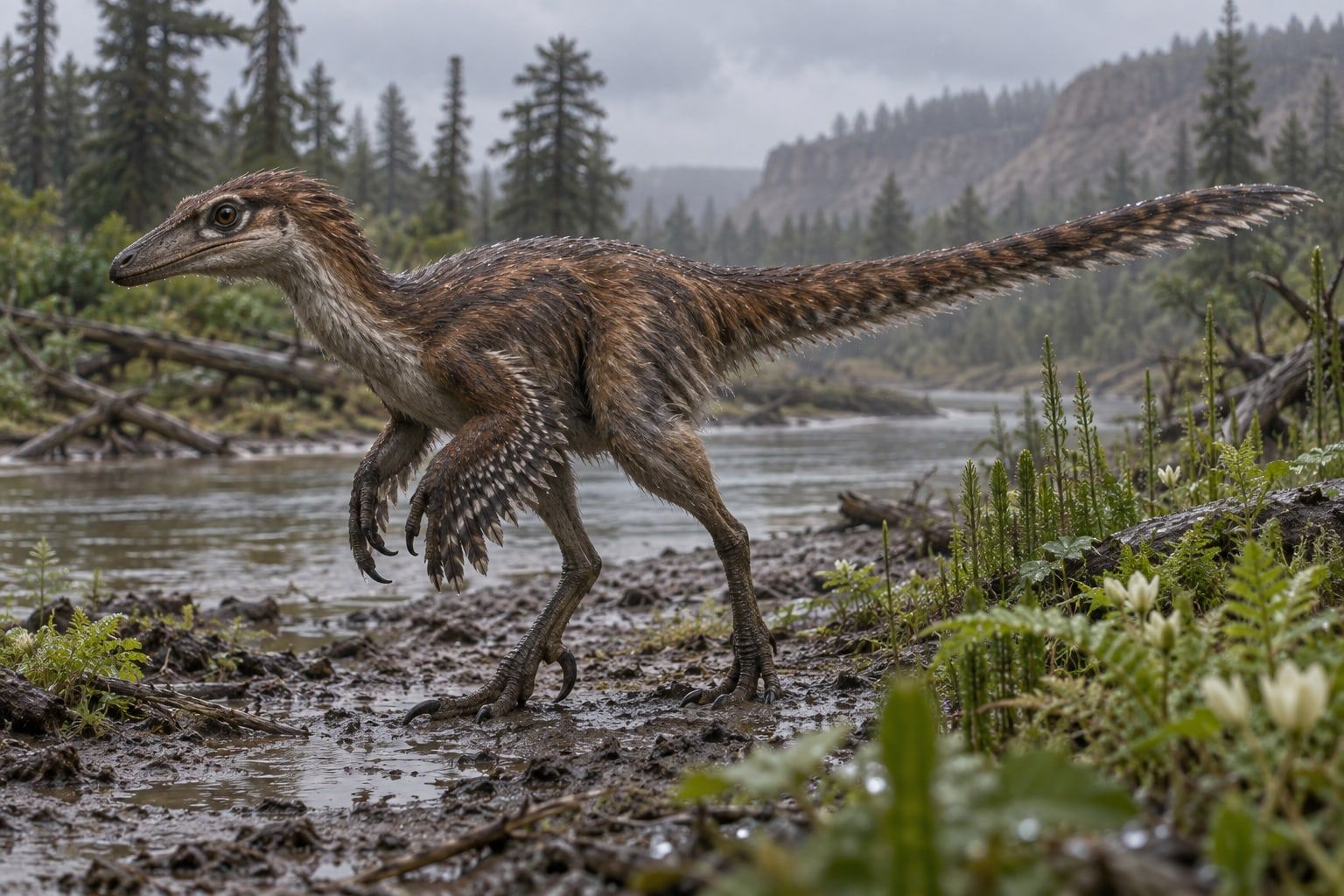
Stenonychosaurus
sten-ON-i-koh-SORE-us
"narrow claw lizard"
DV-0148
- Lived
- 84 to 66 million years ago, Late Cretaceous
- Diet
- Omnivore
- Length
- about 2.5 m (8 ft)
- Group
- Theropods, Troodontidae
- Found in
- Canada and United States
- Named by
- Sternberg 1932
Field notes
About Stenonychosaurus
What it was like
Stenonychosaurus was a small, lightly built theropod, an omnivore that ate both plants and animals. It had unusually large eyes for its size, hinting at good eyesight, and a proportionally large brain, one of the biggest among dinosaurs relative to body size. Its narrow, curved claws gave the genus its name. It grew to about 2.5 meters (8 feet) long, walked on two long legs built for speed, and had grasping hands well suited to catching small prey.
Its world
Stenonychosaurus lived in what is now Alberta, Canada, and parts of Montana and Wyoming in the United States, from about 84 to 66 million years ago, right up to the end of the Cretaceous. It shared its habitat with the swift Struthiomimus, the sickle-clawed Dromaeosaurus, and much larger predators such as Tyrannosaurus, as well as the horned Triceratops and the thick-skulled Pachycephalosaurus.
How it was found
Sternberg named Stenonychosaurus in 1932, and it has had a complicated history since, at times classified as the same animal as Troodon before later studies restored it as its own genus. Around 14 fossil finds are known today, spread across the Dinosaur Park, Oldman, and Lance formations.
The evidence
Where its fossils were found
Today
75 million years ago
To scale
How big was Stenonychosaurus?
Lived alongside
Found in the same rock formations.
Close relatives
Other members of Troodontidae.
Sources: Paleobiology Database, WikidataNamed in: C. M. Sternberg. 1932. Two new theropod dinosaurs from the Belly River Formation of Alberta. Canadian Field-Naturalist 46(5):99-105