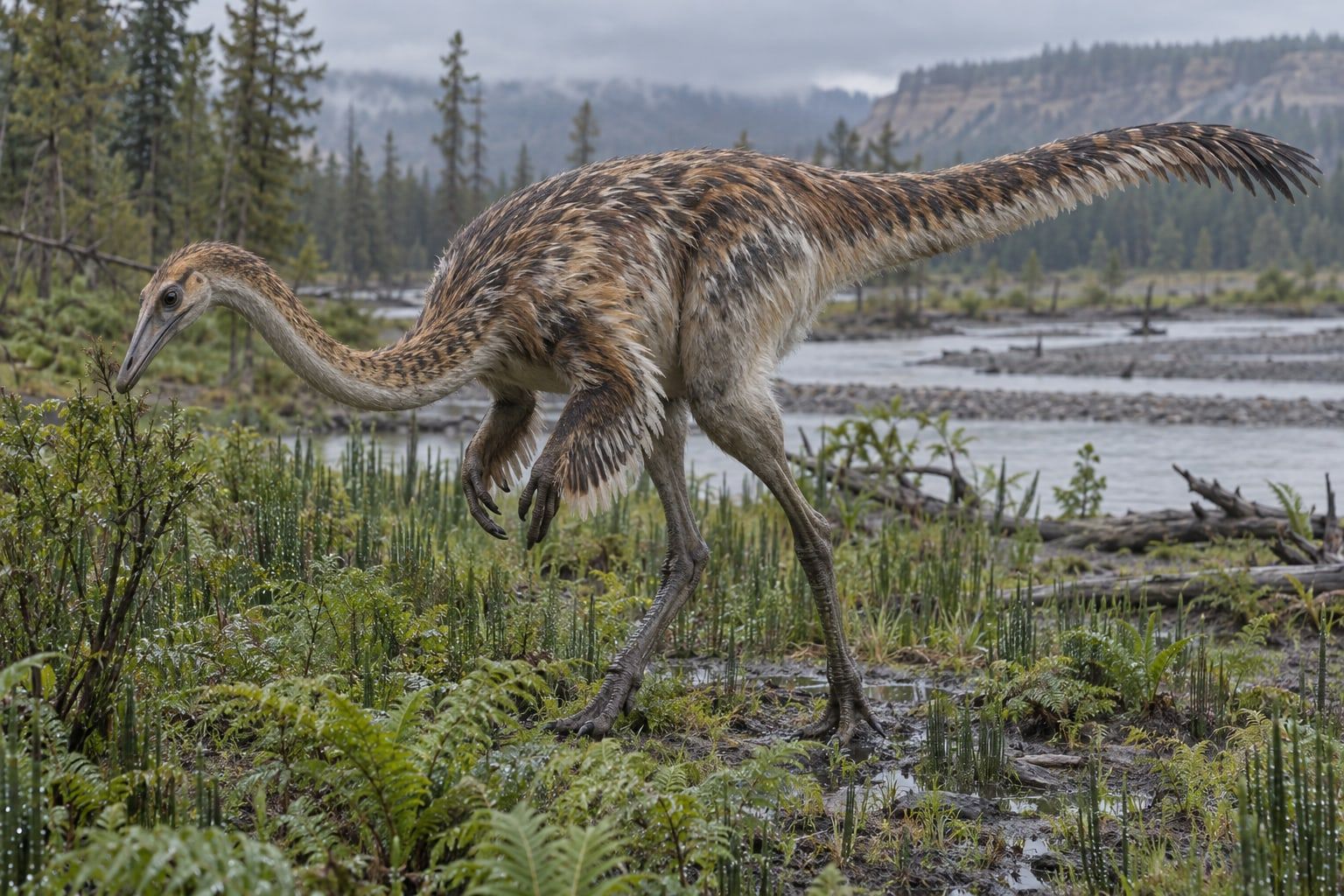
Struthiomimus
STROO-thee-oh-MY-mus
"ostrich mimic"
DV-0101
- Lived
- 84 to 66 million years ago, Late Cretaceous
- Diet
- Omnivore
- Length
- about 4.3 m (14 ft)
- Group
- Theropods, Ornithomimidae
- Found in
- Canada
- Named by
- Osborn 1916
Field notes
About Struthiomimus
What it was like
Struthiomimus looked much like a large, long-legged ostrich, with a long neck, a small toothless head, and slim, grasping hands. It grew to about 4.3 meters (14 feet) long and was almost certainly a fast runner, built for sprinting away from danger rather than fighting it.
Its toothless beak suggests Struthiomimus ate a broad range of food, probably including plants, seeds, and small animals, similar to how ostriches and other modern flightless birds forage today.
Its world
Struthiomimus lived from about 84 to 66 million years ago, in the Late Cretaceous, mainly in what is now Alberta, in Canada, with fossils also reported from Wyoming, in the United States.
It shared its world with the horned Triceratops, the predator Tyrannosaurus, the tyrannosaurid Albertosaurus, and Ornithomimus, another long-legged relative that lived in the same region.
How it was found
Osborn named Struthiomimus in 1916. Around 13 fossil finds are known, among the better-represented ornithomimids, giving a good picture of its skeleton and proportions. Its closest relatives include Ornithomimus, Gallimimus, and Archaeornithomimus, all members of the ostrich-mimic family Ornithomimidae.
The evidence
Where its fossils were found
Today
75 million years ago
To scale
How big was Struthiomimus?
Lived alongside
Found in the same rock formations.
Close relatives
Other members of Ornithomimidae.
Sources: Paleobiology Database, WikidataNamed in: H. F. Osborn. 1916. Skeletal adaptations of Ornitholestes, Struthiomimus, Tyrannosaurus. Bulletin of the American Museum of Natural History 35(43):733-771