Triceratops
try-SERR-uh-tops
"three-horned face"
DV-0054 · type species Triceratops horridus
- Lived
- 72 to 66 million years ago, Late Cretaceous
- Diet
- Herbivore
- Length
- about 9 m (30 ft)
- Group
- Ceratopsians, Ceratopsidae
- Found in
- United States and Canada
- Named by
- Marsh 1889
Field notes
About Triceratops
What it was like
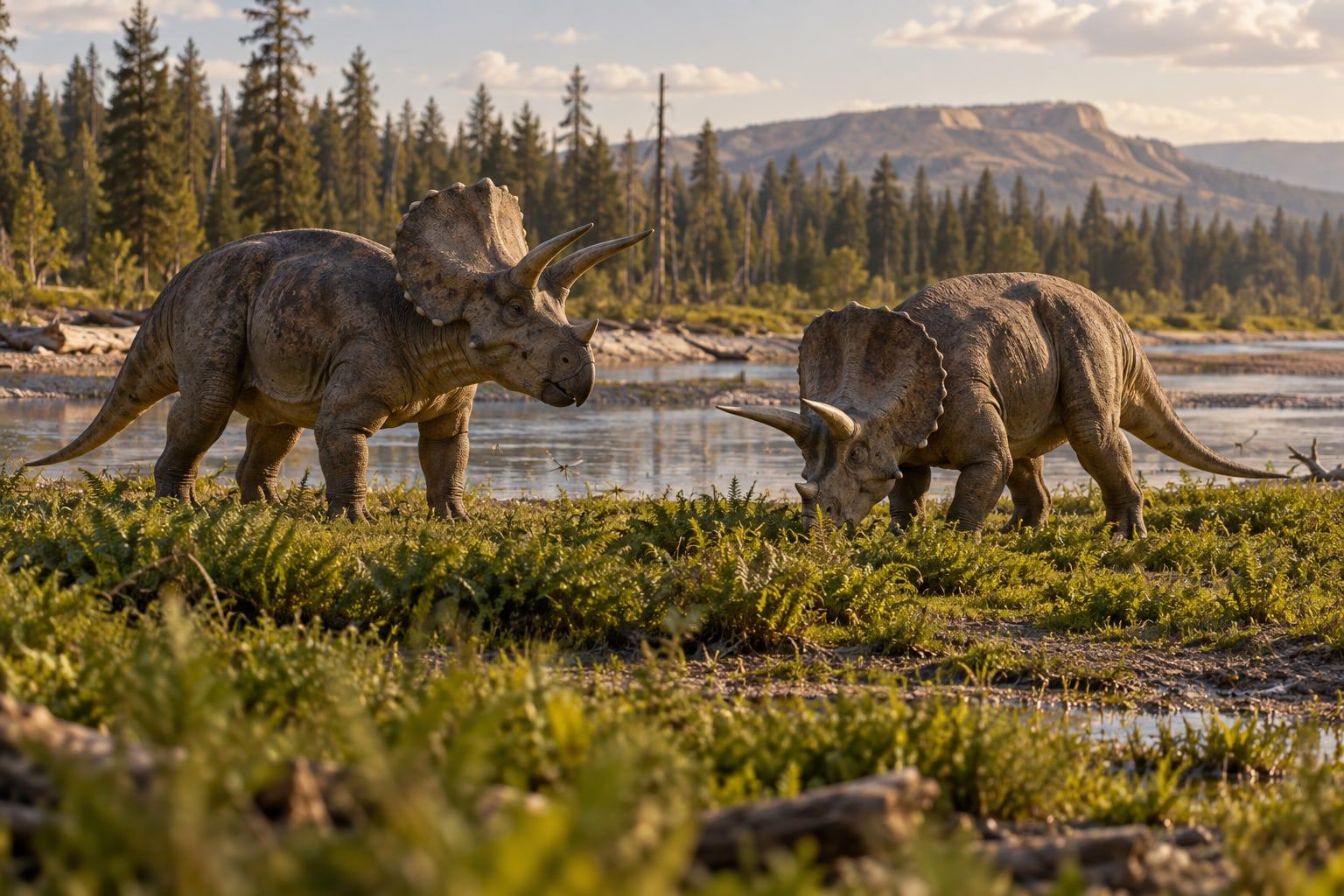
Triceratops was a heavily built plant eater with three horns on its face and a wide bony frill behind its head. It grew up to about 9 meters (30 feet) long, making it one of the largest horned dinosaurs known.
Scientists disagree about what the horns and frill were mainly for. Some think they were weapons for defense against predators, while others argue they were used to identify rivals and attract mates.
Its world
Triceratops lived in the Late Cretaceous, from about 72 to 66 million years ago, across what is now the western United States and Canada. Its bones turn up in rock layers such as Hell Creek and Lance, alongside Tyrannosaurus, Edmontosaurus, Ankylosaurus, and Pachycephalosaurus.
Triceratops was likely prey for Tyrannosaurus, and it was one of the last dinosaurs alive before the extinction 66 million years ago, when an asteroid struck near Chicxulub in Yucatan, Mexico.
How it was found
Marsh named Triceratops in 1889. More than any other horned dinosaur, its fossils keep turning up: about 142 finds have been recorded so far, including skeletons from hatchlings to full-grown adults.
The evidence
Where its fossils were found
Today
70 million years ago
To scale
How big was Triceratops?
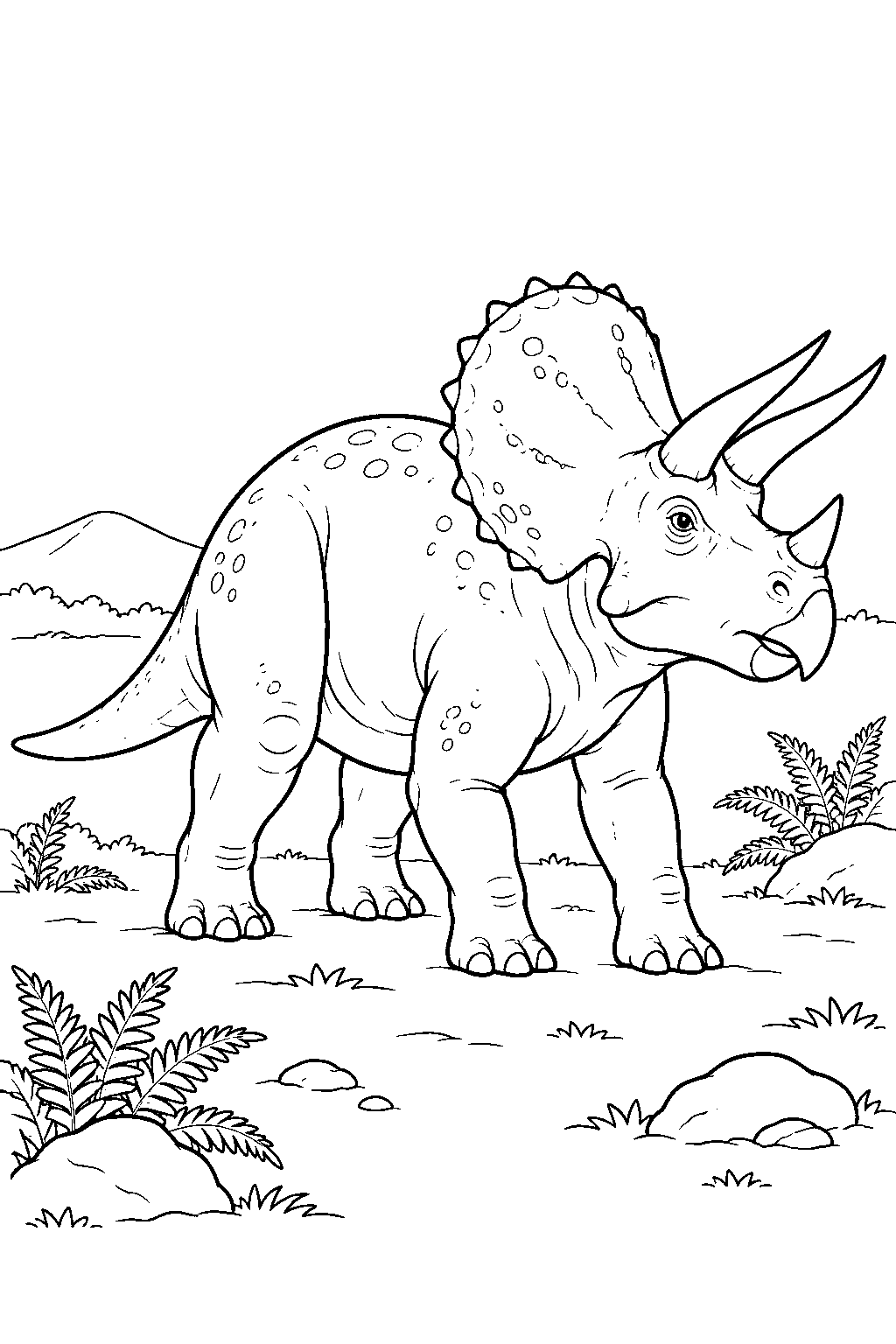 Play and learnColor it in: a printable Triceratops coloring pageFree to print or download.
Lived alongside
Found in the same rock formations.
Close relatives
Other members of Ceratopsidae.
Sources: Paleobiology Database, WikidataNamed in: O. C. Marsh. 1889. Notice of gigantic horned Dinosauria from the Cretaceous. American Journal of Science 38:173-175