Euoplocephalus
yoo-OP-loh-SEF-uh-lus
"well-armored head"
DV-0078
- Lived
- 84 to 66 million years ago, Late Cretaceous
- Diet
- Herbivore
- Length
- estimates range from 5.5 to 7 m (18 to 23 ft)
- Group
- Ankylosaurs, Ankylosauridae
- Found in
- Canada and United States
- Named by
- Lambe 1910
Field notes
About Euoplocephalus
What it was like
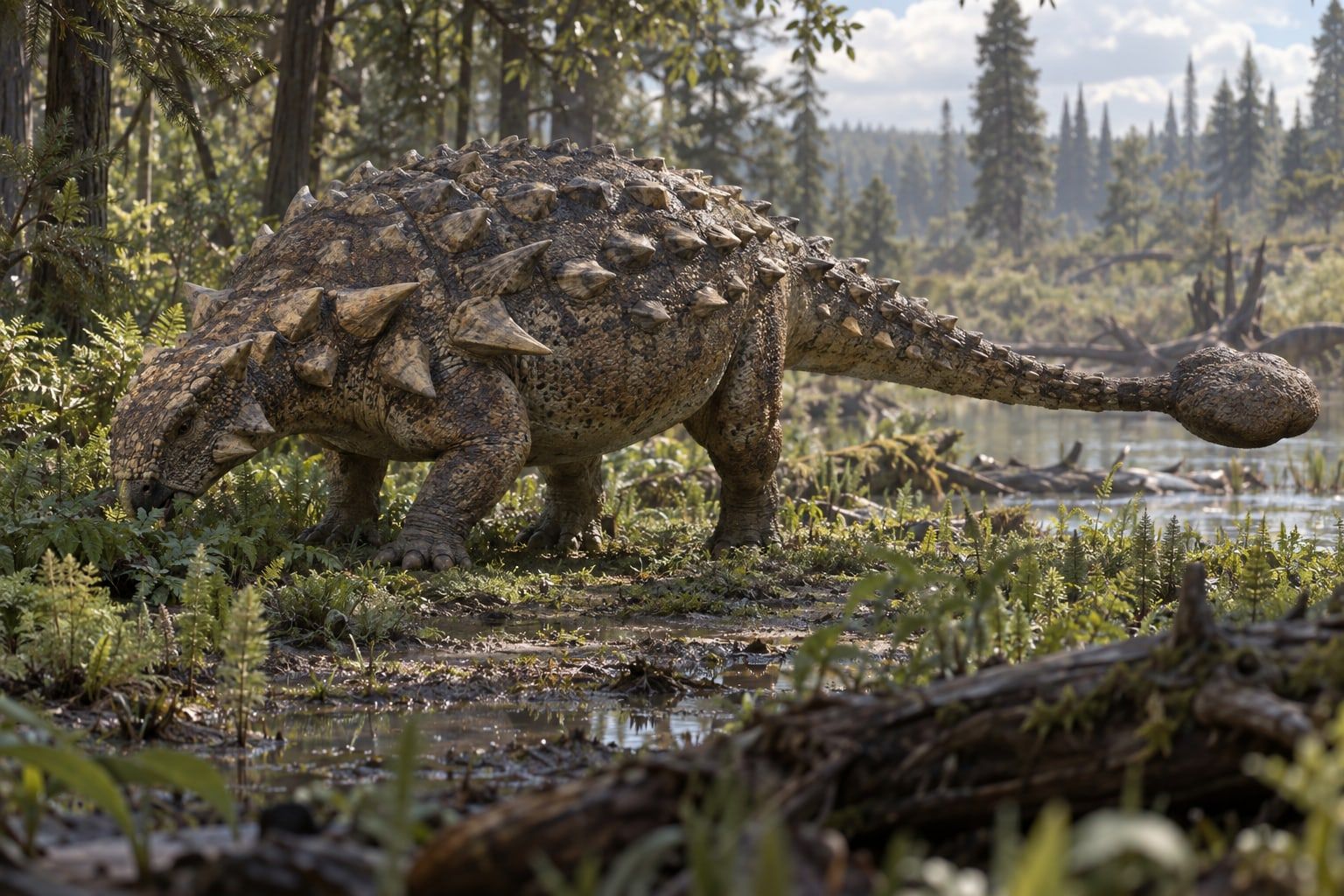
Euoplocephalus was a heavily armored ankylosaur with a low, wide body carried on four sturdy legs. Bony plates and rows of large, ridged scutes covered its back, and two solid bone rings protected its neck. Its skull was also armored, and it fed close to the ground with a short, beaked snout suited to cropping plants. At the end of its tail sat a heavy, rounded club, likely swung as a weapon against attacking predators. Euoplocephalus grew to between 5.5 and 7 meters (18 to 23 feet) long.
Its world
Euoplocephalus lived from about 84 to 66 million years ago, in the Late Cretaceous, in what is now Canada and the United States. Its bones come from Alberta and Montana, including the Dinosaur Park and Judith River formations. It shared its world with predators such as Daspletosaurus and smaller hunters like Troodon and Saurornitholestes, as well as plant eaters including Corythosaurus and the armored Edmontonia.
How it was found
Lambe named Euoplocephalus in 1910. Eighteen fossil finds are known today, including several nearly complete skeletons, so a great deal is known about its build. For decades, many ankylosaurid specimens from the same rocks were lumped into Euoplocephalus, making it seem like one of the best-known dinosaurs of its kind. More recent studies have split some of those specimens into separate genera, such as Scolosaurus and Anodontosaurus, narrowing what is now confidently assigned to Euoplocephalus itself.
The evidence
Where its fossils were found
Today
75 million years ago
Lived alongside
Found in the same rock formations.
Close relatives
Other members of Ankylosauridae.
Sources: Paleobiology Database, WikidataNamed in: L. M. Lambe. 1910. Note on the parietal crest of Centrosaurus apertus and a proposed new generic name for Stereocephalus tutus. The Ottawa Naturalist 24:149-151