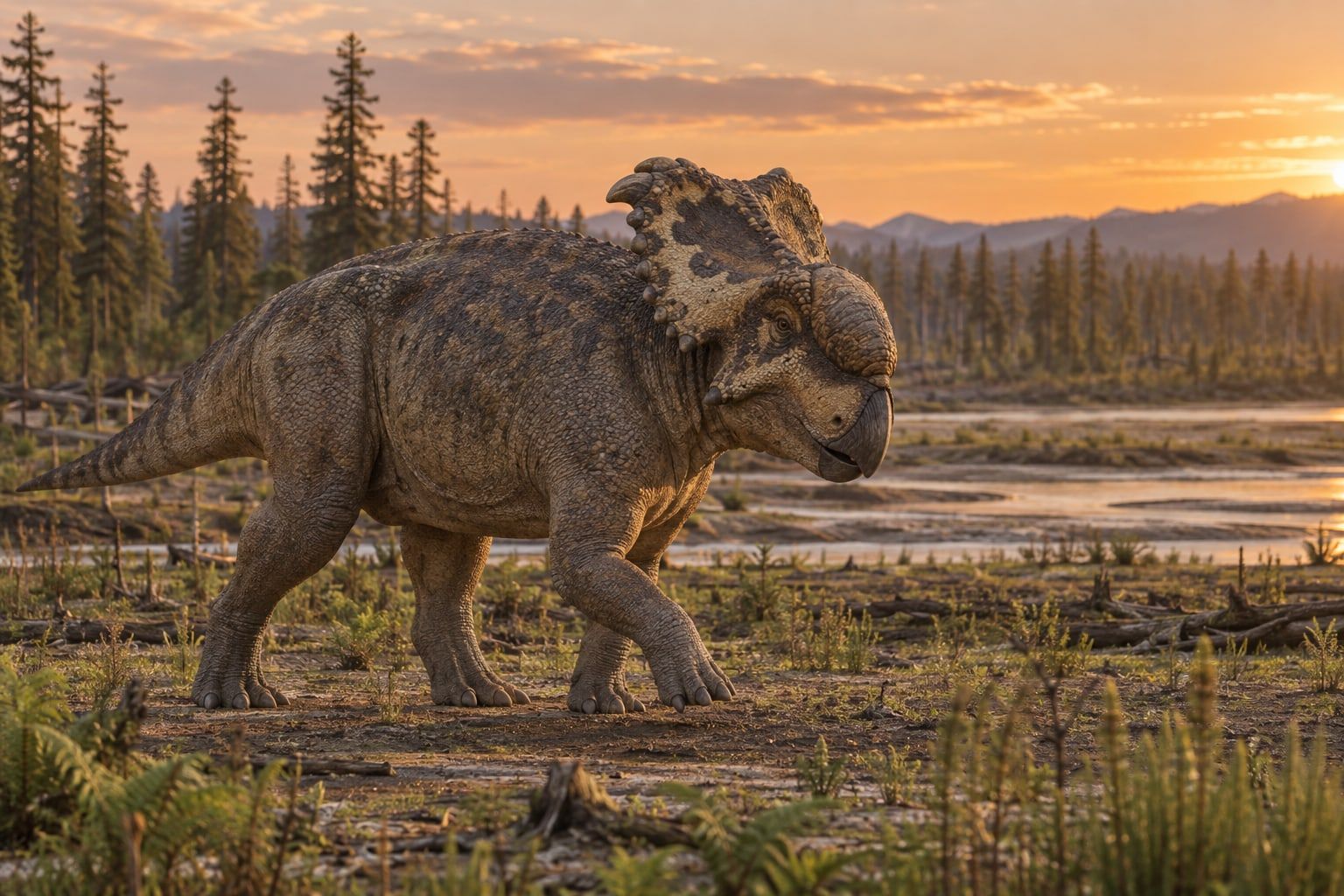
Pachyrhinosaurus
PAK-ee-RY-no-SORE-us
"thick-nosed lizard"
DV-0173 · type species Pachyrhinosaurus canadensis
- Lived
- 84 to 66 million years ago, Late Cretaceous
- Diet
- Herbivore
- Length
- estimates range from 6 to 8 m (20 to 26 ft)
- Group
- Ceratopsians, Ceratopsidae
- Found in
- Canada and United States
- Named by
- Sternberg 1950
Field notes
About Pachyrhinosaurus
What it was like
Pachyrhinosaurus was a large ceratopsian, growing to roughly 6 to 8 meters (20 to 26 feet) long, but instead of the long nose horn seen in relatives like Triceratops, it carried a thick, rough boss of bone across its snout. Bony bumps also topped its brow and the frill behind its head.
The boss was probably used for shoving matches with rivals or for display, much like the horns of its relatives served in other ceratopsids.
Its world
Pachyrhinosaurus lived from about 84 to 66 million years ago, in the Late Cretaceous, across what is now Alberta and Alaska. Its fossils come from the Wapiti, Horseshoe Canyon, and Prince Creek formations, among others.
It shared its world with the plant eater Edmontosaurus, the horned Anchiceratops and Montanoceratops, the armored Euoplocephalus, the troodontid Troodon, and the small hunters Saurornitholestes, Richardoestesia, and Albertosaurus.
How it was found
Sternberg named Pachyrhinosaurus canadensis in 1950. About 13 fossil finds of the genus are known, including large bonebeds with the remains of many individuals together, evidence that these animals may have moved in herds.
The evidence
Where its fossils were found
Today
75 million years ago
Lived alongside
Found in the same rock formations.
Close relatives
Other members of Ceratopsidae.
Sources: Paleobiology Database, WikidataNamed in: C. M. Sternberg. 1950. Pachyrhinosaurus canadensis, representing a new family of the Ceratopsia, from southern Alberta. National Museum of Canada Bulletin 118:109-120